The short answer: no. But it does require a different approach to a spring or autumn trip. The monsoon doesn’t shut Nepal down — it changes the rules of the game. If you’ve got holiday time in the summer and Nepal is your destination, this article will explain where to go, what to expect and how to prepare so that your summer in the Himalayas is worthwhile.
What is the monsoon in Nepal, and when does it last?
The monsoon is a rainy season driven by moist air masses from the Indian Ocean. In Nepal, it usually lasts from mid-June to mid-September, with the heaviest rainfall occurring in July and August.
What does this mean in practice:
- regular, often heavy rainfall — usually in the afternoon and at night
- high air humidity (70–90%)
- limited visibility — clouds obscure the peaks for most of the day
- the risk of landslides and roads being washed away, particularly in mountain valleys
- fewer hikers on the trails — popular routes are noticeably quieter and less busy
- Lusher greenery, waterfalls, vibrant colours — Nepal looks completely different to how it does in autumn
The monsoon is not uniform. And it is precisely this lack of uniformity that is key to planning a summer holiday.
Shade – why it’s the most important concept for summer trekking
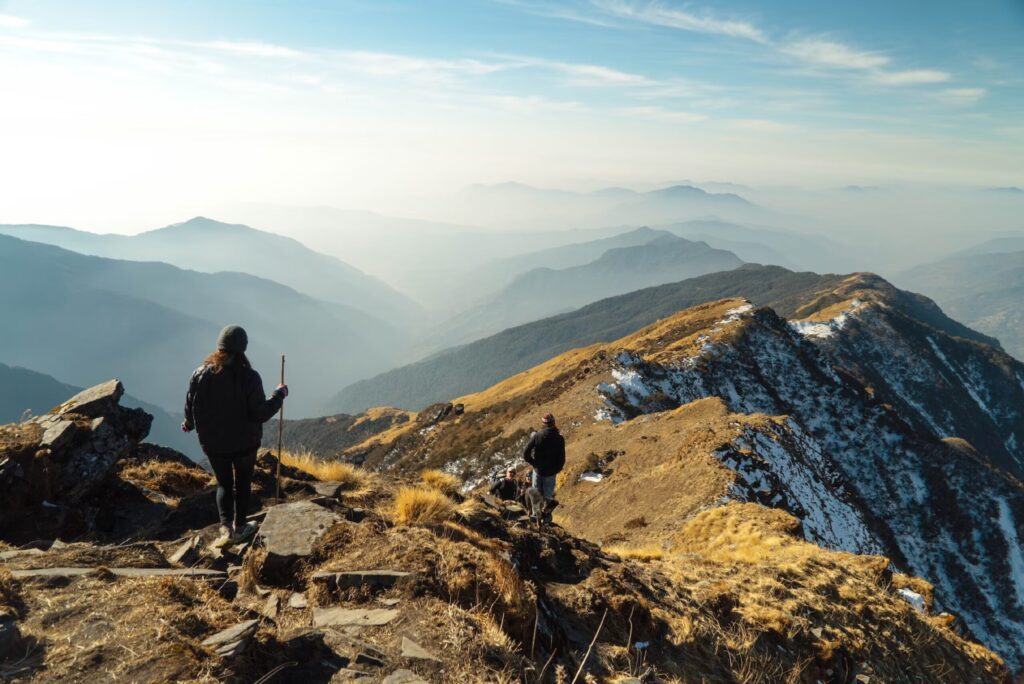
The Himalayas form a natural barrier that traps moist air masses on their southern side. The regions lying beyond this barrier — to the north of the main ridges — receive significantly less rainfall. This is known as the rain shadow.
In practice, this means that whilst it rains every day in Kathmandu and on the Annapurna trails, regions such as Upper Mustang, Dolpo and Manang have conditions similar to those of a dry, high-altitude steppe. It is precisely there that Himalayan trekking makes sense in summer.
Where should you go in Nepal in the summer?
Upper Mustang – the best option during the monsoon
Upper Mustang is the former kingdom of Lo, cut off from the rest of Nepal by the main Himalayan range. The landscape resembles that of Tibet — arid, plateau-like, with distinctive rock formations and a deeply rooted Tibetan culture.
- Rainfall during the monsoon: minimum — approx. 200–300 mm per year (by way of comparison, Pokhara can receive 1,000+ mm per month in summer)
- Height: The route runs mainly between 3,500 and 4,200 metres above sea level, with its highest point at Lo Manthang (3,840 metres)
- Length: 10–14 days
- Important information: Upper Mustang is a restricted area — a special permit (Restricted Area Permit) is required
- How to get there: a flight or drive to Jomsom, then a walk or jeep ride to Lo Manthang
Upper Mustang is one of those places that’s best visited in summer—fewer tourists than in the peak season, lower prices, and a more intimate atmosphere.
Dolpo – for more experienced trekkers
Dolpo is one of the most remote regions of Nepal, and also lies in the rain shadow. It is characterised by its unique cultural heritage (Bon, Tibetan Buddhism) and rugged landscape.
- Lower Dolpo: With less restrictive access, the Phoksundo Lake trek is one of the most beautiful in Nepal
- Upper Dolpo: restricted area permit, an area for experienced trekkers
- Season: June–September is actually a good time to visit here
- Please note: Logistics are more challenging here than in Mustang — there’s less infrastructure, the routes are longer, and you’ll need camping kit for Upper Dolpo
Manang and the surrounding area (with some reservations)
Manang (3,519 m), situated beyond the Thorong La pass in the Annapurna region, is partially sheltered from the monsoon rains. It is not as dry as Mustang, but the conditions are considerably better than on the lower sections of the Annapurna Circuit.
Trekking the Annapurna Circuit in summer is possible, although it should be noted that the sections below Manang (particularly around Besisahar and Chame) may be wet and muddy. The route above Manang is in better condition. The Thorong La Pass (5,416 m) is sometimes closed in summer due to snow and weather conditions — you should check the conditions regularly.
What NOT to plan for the summer
The following routes are strongly discouraged between June and August:
- Everest Base Camp — The monsoon is hitting hard here; visibility is almost zero; there is a risk of landslides
- Poon Hill and the Annapurna region (lower reaches) — mud, heavy rain, leeches on the trail (yes, leeches are a very real part of monsoon trekking in the forests)
- Langtang, Manaslu — heavy rainfall, risk of landslides
- Most of the classic routes in the Khumbu and Annapurna regions at lower altitudes
If, despite this, anyone decides to visit one of these areas in July — they should be aware that they are doing so at their own risk and with full knowledge of the restrictions.
What works in your favour in the summer
The monsoon has its merits, which are worth appreciating:
- Lower prices — hotels in Kathmandu and Pokhara, domestic flights, and even some travel agencies offer summer discounts
- Few tourists — it’s noticeably quieter on the trails, which is a definite advantage for many people
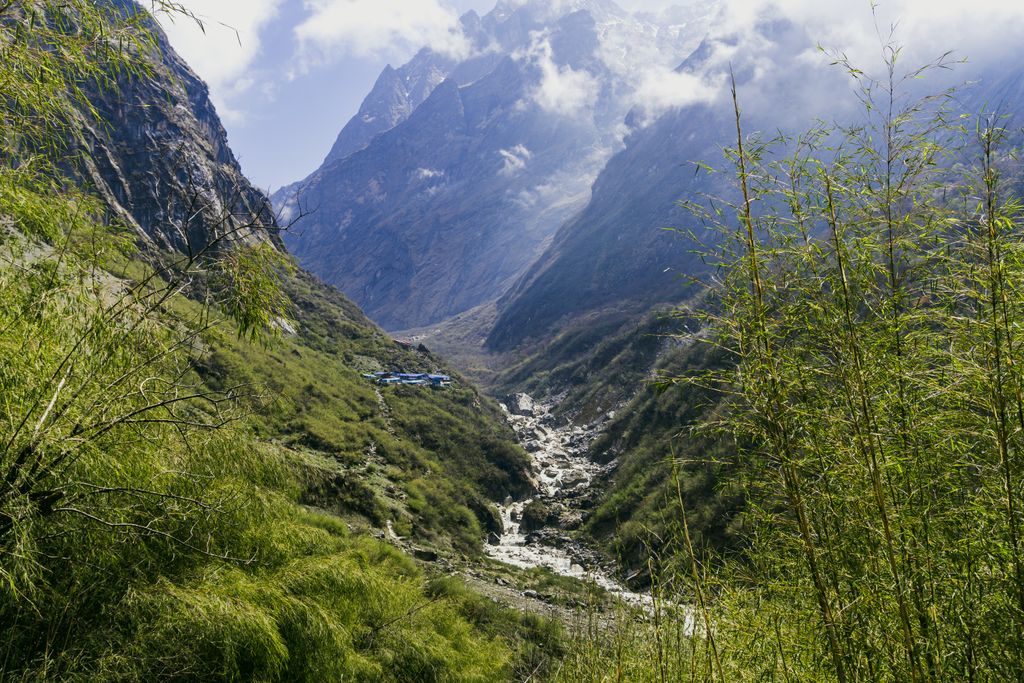
- Green Nepal — the landscape after the rain is incredibly vibrant; the rice terraces are flooded, and the waterfalls are raging
- Cultural Nepal — Kathmandu and Pokhara operate as normal in the summer; it’s a good time to explore the temples, museums and local culture without the monsoon-related restrictions on trekking
How to pack for a trek during the monsoon season
Moisture is the main challenge here — not just the rain falling from above, but also the damp air, wet trails and the difficulty in drying things out.
An absolute must-have:
- Rain cover for a rucksack — not an option, a fundamental requirement
- Dry bags Inside the rucksack — electronics, documents and a change of dry clothes must be securely packed
- Rain jacket with a membrane (Gore-Tex or similar) — a thin cape isn’t enough
- Rain gaiters — Trousers that are wet from mid-calf down are the norm on monsoon trails
- Shoes with a quick-drying lining or waterproof — and accepting that they’ll get wet
- Spare socks in a dry bag — at least 2–3 pairs more than usual
What to leave at home:
- cotton clothes (they don’t dry out; they absorb moisture)
- materials that are difficult to dry
- excessive cloud cover — the moist air makes it warm even at high altitudes
Leeches – a topic that many people avoid
On wooded trails below 3,000 metres above sea level, you may come across land leeches during the monsoon season. They are small, quick and almost imperceptible when they bite.
How to protect yourself: closed-toe shoes, long socks tucked into your trousers, insect repellent on your shoes and gaiters. The bite is painless and harmless, but not particularly pleasant. On trails in the rain shadow (Mustang, Dolpo), leeches are not a problem.
Logistics – what to watch out for in summer
- Access roads — particularly in mountainous areas, where the route may be blocked by landslides. Travelling to Jomsom (Upper Mustang) by air from Pokhara is safer than travelling by road
- Domestic flights — Monsoon clouds are causing delays and cancellations, particularly on flights to Lukla and Jomsom. In summer, it’s even more important than usual to allow plenty of time
- Insurance — Helicopter rescue is always important, and even more so in summer, as ground-based evacuation can be more difficult
FAQ
Is it possible to travel to Nepal in June? Yes, if you choose an area on the leeward side. June is still relatively mild — the monsoon is only just getting into full swing. Upper Mustang in June is one of the best choices of the whole year.
Is July worse than June? July and August mark the peak of the monsoon season — heavier rainfall and a higher risk on the classic routes. In areas sheltered from the rain, the difference is less pronounced.
Is Nepal cheaper in the summer? Generally speaking, yes — hotels, some domestic flights and travel agency services can be cheaper. The permit for Upper Mustang remains expensive regardless of the season.
Is it worth visiting Kathmandu in the summer? Kathmandu is a bustling city all year round. It does rain, but it doesn’t bring the city to a standstill. It’s a good time to visit the historic sites, temples and cultural attractions without the peak-season crowds.
Is the monsoon dangerous? The monsoon increases the risk of landslides and washed-out trails, particularly in regions with heavy rainfall. In areas sheltered from the rain, the risk is significantly lower. Good insurance and a flexible plan – but above all, caution – are essential.
Summary
The monsoon doesn’t rule out Nepal — poor planning does. If you’re on holiday in the summer and keen to go trekking, Upper Mustang is one of the best choices all year round: dry, culturally unique and free from crowds. Dolpo, for more experienced trekkers, offers a similar experience in even more remote terrain.
It’s best to book the classic treks — Everest, Annapurna, Langtang — in spring or autumn. Summer in Nepal is a different kind of journey altogether, which, for the right person in the right place, can be one of the best trips of a lifetime.
Are you planning a trip to Nepal this summer and not sure which region to choose based on your dates and budget? Get in touch with us — we’ll help you weigh up your options and plan a trip that makes sense.
