Langtang is one of those treks that often lose out to Everest and Annapurna in popularity rankings, but is well worth considering. With no domestic flights required, direct access from Kathmandu, spectacular views and the authentic culture of the Tamang people — this is precisely why more and more people are choosing Langtang as their first or second trek in Nepal. And they rarely regret it.
Basic information about the route
- Location: the Langtang Valley, about 60 km north of Kathmandu, on the border with Tibet
- Starting point: Syabrubesi (approx. 1,550 m above sea level) — accessible by bus or jeep from Kathmandu, 7–9 hours
- Highest point: Kyanjin Ri (4,773 m above sea level) or Tsergo Ri (4,984 m above sea level) as optional vantage points; Kyanjin Gompa itself lies at 3,870 m above sea level.
- Trekking distance: 7–10 days (basic route, returning via the same valley) or longer if taking the Gosaikunda route
- Level of difficulty: moderate — you just need to be in good shape and keep a steady pace
- Permit: Langtang National Park Entry Permit (approx. 30 USD) + TIMS card
Why Langtang, and not Everest or Annapurna?
It’s not a question of which place is more beautiful. It’s a question of logistics, timing and whether it suits your needs and circumstances.
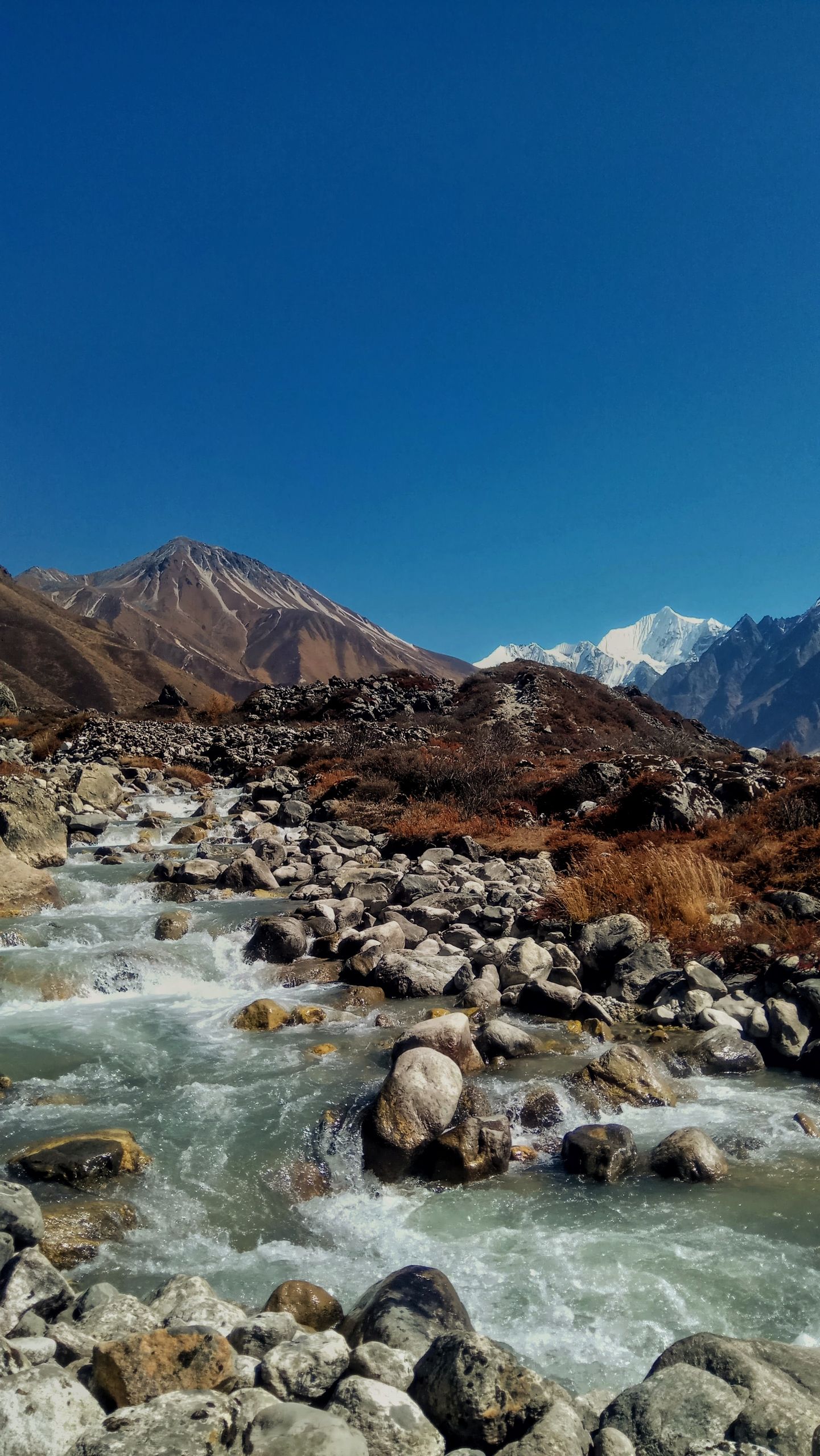
Langtang wins when:
- you have 10–14 days for the whole trip and don’t want to take any risks with the flight to Lukla
- Are you looking for a trekking experience without the crowds and with a more intimate atmosphere?
- If you want to combine mountains with culture, the Langtang Valley is home to the Tamang people, with strong Tibetan influences, monasteries and distinctive architecture
- Are you planning your first or second trek and want easy access and a straightforward trek?
Everest or Annapurna would be better if:
- Do you particularly want to see Everest, the eight-thousander Makalu or Lhotse, visit Namche Bazaar, or would you like to hike the iconic Annapurna Circuit?
- you have more time and a bigger budget for domestic flights or longer routes
What does the route look like day by day?
Below is an indicative itinerary for a standard Langtang Valley trek:
Day 1: Kathmandu → Syabrubesi (transfer, overnight stay)
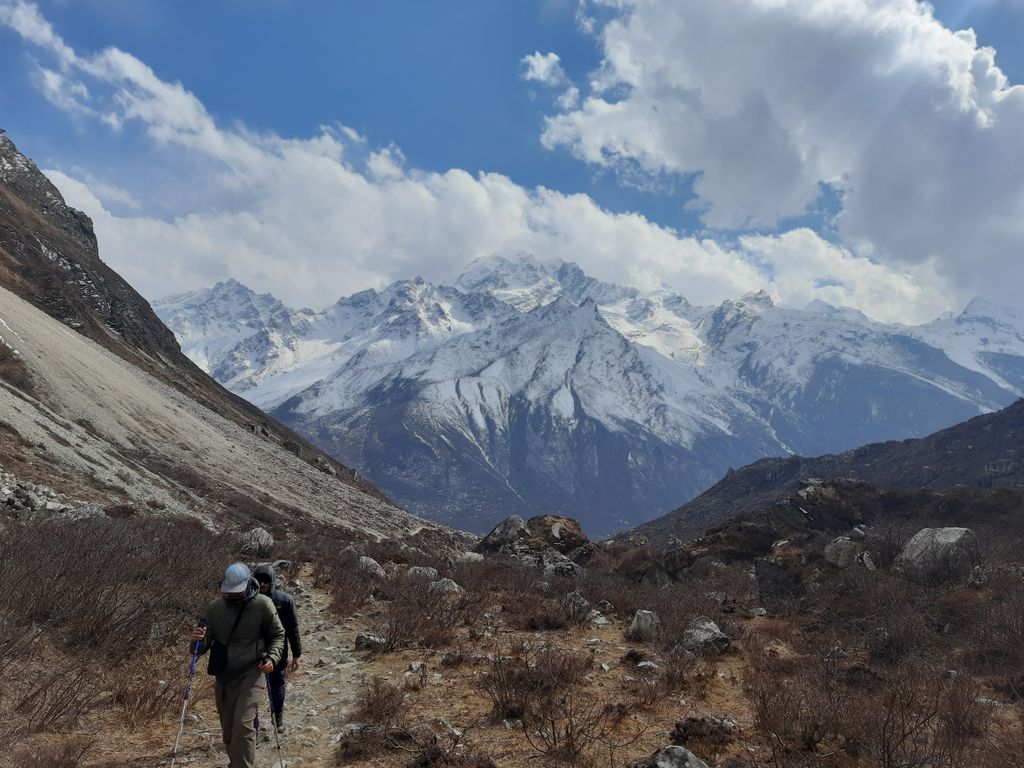
Day 2: Syabrubesi → Lama Hotel (2,380 m, 5–6 hours’ walk) A gentle climb through the forest, along the Langtang Khola river. A good way to warm up your legs ahead of the next few days.
Day 3: Lama Hotel → Langtang Village (3,430 m, 5–6 hours) The valley begins to open out, and the views of the snow-capped peaks become increasingly clear. Langtang Village was rebuilt following the 2015 earthquake — it’s worth bearing this in mind and treating local businesses with respect.
Day 4: Langtang Village → Kyanjin Gompa (3,870 m, 3–4 hours) A short day — by design. Time to acclimatise, take a stroll around the area, visit the monastery and milk a yak.
Day 5: Kyanjin Gompa — acclimatisation + ascent of Kyanjin Ri (4,773 m). Optional hike to a viewpoint offering panoramic views of Langtang Lirung (7,227 m) and the surrounding peaks. For the more ambitious — Tsergo Ri (4,984 m, an additional 4–5 hours).
Days 6–7: Return to Syabrubesi (or the route via Gosaikunda)
If you choose the route via Gosaikunda (the sacred lakes at 4,380 m), the trip takes 2–3 days longer and requires a higher level of fitness.
Altitude and acclimatisation
Langtang is sometimes underestimated in terms of altitude, as its name doesn’t include „Everest” or „8000’. That’s a mistake.
Kyanjin Gompa lies at an altitude of almost 4,000 metres above sea level, whilst the viewpoints are at altitudes of between 4,700 and 5,000 metres. This is enough for altitude sickness to take its toll if you ascend too quickly.
The rules here are the same as everywhere else:
- The next night’s accommodation should not be more than 300 – max. 500 metres higher than the previous night’s accommodation
- An acclimatisation day at Kyanjin Gompa before ascending the viewing peaks is compulsory, not optional
- Headaches, nausea and insomnia are important warning signs — don’t ignore them
Infrastructure and accommodation
Langtang is a tea-house trek — you won’t need a tent or a camping stove. The standard of accommodation is comparable to that on other popular routes in Nepal: simple rooms, shared bathrooms, and a dining room serving hot meals.
Following the 2015 earthquake, which destroyed a significant part of the infrastructure in the valley, the tea houses were rebuilt. Most of them are new, which, paradoxically, means they are of a higher standard than on some of the older trails.
Food: dal bhat, noodles, soup, toast, yak cheese (a local speciality — well worth a try). At higher altitudes, prices go up and portions are smaller, but a hot meal is always available.
The most common mistakes
- Too fast a pace — Langtang looks unassuming on the map, but the altitude is a key factor. An extra day’s acclimatisation costs very little but is well worth it
- Underestimating the cold — at altitudes of 3,800–4,700 metres above sea level, night-time temperatures drop below zero even during the high season. A sleeping bag (rated to -10°C) and a warm jacket are not just an option
- No return buffer — The journey to Kathmandu takes a whole day; if you’ve got a flight from Poland the next morning, that’s a bit tight
- Ignoring the valley’s history — Langtang Village lost many of its residents in the 2015 earthquake. It’s worth visiting with respect and spending your money locally
FAQ
Is Langtang suitable for people over 60? Yes, provided you’re in good shape and take it at a leisurely pace. The altitude requires some care, but the route isn’t technically demanding.
Is it possible to do the Langtang trek on your own, without a guide? Yes — the trail is well signposted and there’s a well-developed network of tea houses. However, a guide is a real bonus, especially if you’re planning to visit the optional viewpoints.
What’s the best season? Spring (March–May) and autumn (October–November). In winter, the higher sections of the route may be covered in snow; in summer, the monsoon reduces visibility.
Is Langtang crowded? Definitely fewer than at the ECB or Poon Hill during peak season. This is one of its greatest advantages for those who value peace and quiet on the trail.
Is it possible to combine the Langtang and Gosaikunda treks? Yes — this is a popular option that extends the trek by 2–3 days, taking in the sacred lakes at 4,380 metres above sea level. However, it requires a higher level of fitness and extra time.
Summary
The Langtang Valley Trek is one of the best-balanced treks in Nepal — significant altitude, stunning views, authentic culture and straightforward logistics with no domestic flights. It isn’t marketed as heavily as Everest or Annapurna, but for many people, that is precisely its greatest appeal.
If you’re looking for your first or second trek in the Himalayas and want a good balance between challenge and logistics, Langtang is a very sensible choice.
Are you planning a trek in Langtang and not sure where to start? Get in touch with us — We’ll help you choose the right pace, route options and everything else you need before you set off.
