

A typical trek in Nepal involves several hours’ walking a day, for several or even over a dozen days in a row, with a rucksack on your back, often over uneven terrain and with significant elevation gain. Motivation is a good start, but it is your fitness and overall preparation for the trip that determine whether the trip will be enjoyable. Below is a specific plan — without any unnecessary complications.
What does trekking really demand of the body?
Before you start planning your training sessions, it’s worth knowing exactly what your body can expect on the trail:
- Length of the daily stages: A 4–8-hour hike, with 800–1,200 metres of ascent and descent
- Duration: Several days in a row without a full recovery day; it is recommended to have at least one recovery day for treks lasting more than 7 days
- Load: a rucksack weighing 7–12 kg for the whole day
- Location: stony, uneven paths, wet stones, steep ascents and descents, uneven ground
- Height: reduced oxygen levels above 3,000 metres above sea level — the body has to work harder to maintain the same level of exertion
It follows, therefore, that what you need above all is aerobic endurance i leg strength — particularly the quadriceps, glutes and calves. The gym and cardio are a good foundation, but without some off-road hiking you won’t be ready.
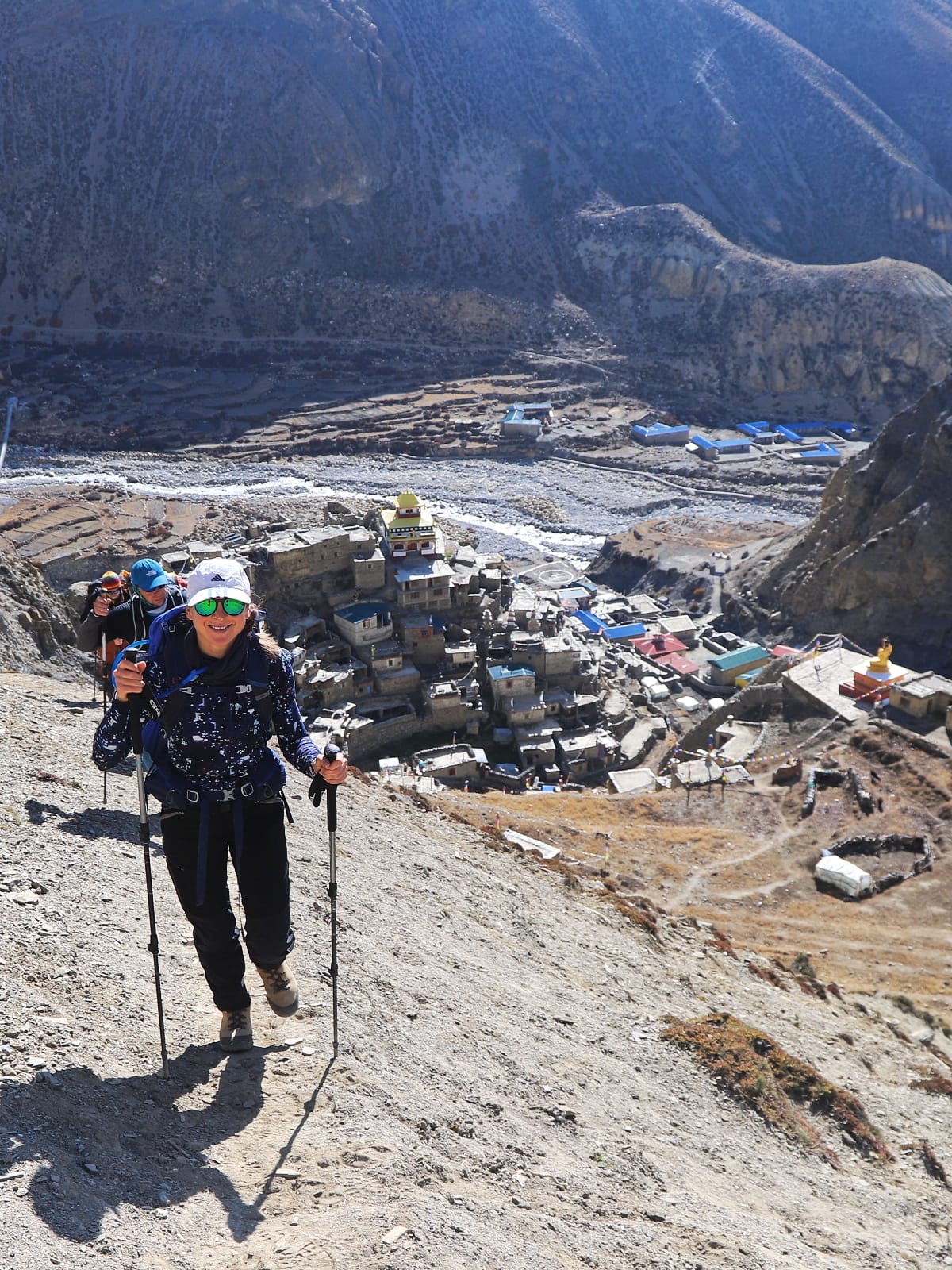
How long do you need to get ready?
Minimum: 8 weeks of regular training – ideally, if you’re active on a daily basis and are simply adding some specific preparation
Ideally: 16–20 weeks, if you’re starting from a low base
Eight weeks is enough to make a real improvement in your leg endurance and strength — provided you train regularly (3–4 times a week) and gradually increase the workload. Trying to catch up on everything in the last two weeks before your trip definitely won’t work. On the contrary — overloading your body just before you set off is a sure-fire way to get injured.
Sample 8-week training plan
Weeks 1–2: Building the foundations
Aim: to establish a regular routine and assess current fitness levels.
- Twice a week: leg strength training (squats, lunges, deadlifts, toe raises) — 3 sets of 12–15 repetitions
- 2–3 times a week: aerobic exercise — brisk walking, cycling, using an elliptical trainer or light jogging, 30–45 minutes
- Once a week: a longer walk in the fresh air, 1.5–2 hours, without a rucksack
Don’t start at maximum intensity. The first two weeks are about finding your rhythm, not racing.
Weeks 3–4: Introduction to the rucksack and the terrain
Aim: to teach the body to walk whilst carrying a load.
- Twice a week: leg strength training with a heavier load than in weeks 1–2
- Twice a week: aerobic exercise, 45–60 minutes
- Once a week: a hike with a rucksack (start with 4–5 kg), 2–3 hours — ideally in hilly terrain
If you live in a city without access to the mountains, stairs are your best friend. 30–45 minutes of climbing stairs with a rucksack is a very effective substitute for mountainous terrain.
Weeks 5–6: Increasing the workload and duration
Aim: to accustom the body to exercising for several hours at a time.
- Twice a week: strength training with a focus on stability — single-leg exercises (e.g. step-ups, Bulgarian squats), balance work
- Twice a week: aerobic exercise, 50–60 minutes at a moderate pace
- Once a week: hike with a rucksack (6–8 kg), 4–5 hours with an elevation gain
Over the coming weeks, you’ll notice just how different a 3-hour walk is from a 1-hour walk. It’s this difference that you need to get used to before you set off.
Weeks 7–8: Trekking simulation and tapering
Aim: one solid test and a steady build-up to peak form.
- Week 7: One long weekend trip — ideally to the mountains, two days in a row with a rucksack (8–10 kg), 5–6 hours’ walking each day. The Tatra Mountains, the Karkonosze, the Beskids — any Polish mountain route with a decent elevation gain will be perfect
- Week 8: A 30–40% reduction in training load. Light maintenance sessions, plenty of sleep, and a good diet. The final week before departure should be lighter, not heavier
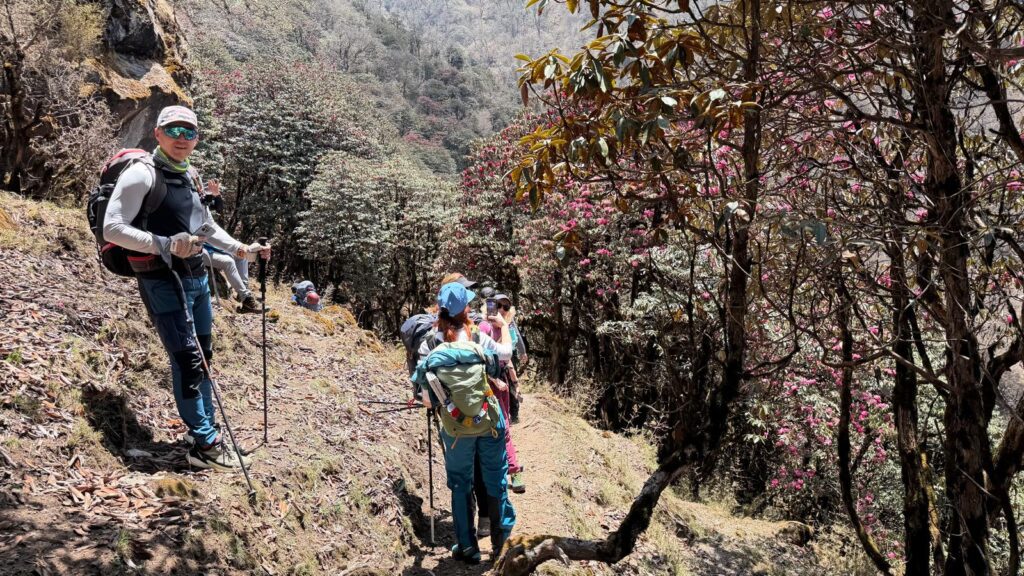
What else makes a difference?
Shoes — second-hand, not new
This is one of the most common mistakes. New hiking boots on the trail = blisters from day one. Boots bought two months before your trip should have been worn on at least a few longer hikes before you board the plane.
Sleep and recovery
The body adapts to physical exertion whilst resting, not whilst training. 7–8 hours’ sleep is not a luxury; it’s part of your preparation. People who don’t get enough sleep recover more slowly and build up their endurance more slowly.
Running — it isn’t essential, but it can help
Running improves your aerobic fitness, but on the trail you don’t run — you walk. If you like running, that’s great. If not, brisk walking, climbing stairs and cycling work just as well, and the risk of injury is lower.
The gym vs. a walk in the countryside
The gym builds strength. Cross-country walking teaches the body how to use that strength on uneven ground, on varying gradients and over long periods under load. The two work best together.
How can you tell if you’re ready?
A few simple checks before you set off:
- Walking up the stairs for 30 minutes with a rucksack (8 kg) without stopping — without any discomfort?
- A 5-hour hike in the countryside with some uphill sections — do you feel tired the next day, but not completely knackered?
- Have the shoes been tested on at least three longer trips — no chafing or new blisters?
- What’s your VO2 max? If you’re in the top 20% for your age group – that’s fine
If so, you’re well prepared. If any of the points give you cause for concern, you know where you need to work on.
The most common mistakes
- Starting too late — Four weeks before departure isn’t enough time to make any real improvements to your fitness
- Just the gym or just running — none of them on their own will prepare you for a multi-day trek with a rucksack in the Himalayas
- No field marches — Training on a treadmill or pavement involves completely different physical demands to those of a stony, hilly path; hiking with a rucksack – ideally in the mountains – is the best preparation
- Ignoring recovery — More training doesn’t always mean better; an overworked body just before a trip increases the risk of injury
- New shoes on the trail — it’s a mistake that comes at a painful cost, both figuratively and literally
FAQ
Can someone who is out of shape get fit in 8 weeks? Yes, if you start from scratch and build up gradually. In 8 weeks, you can build a solid foundation for treks such as Poon Hill or Mardi Himal. For more challenging treks (EBC, Langtang above 4,000 m), it’s better to allow 12–16 weeks.
Do yoga or Pilates help? Yes, particularly in terms of stability, flexibility and core work. It doesn’t replace cardio or leg strength training, but it’s a great addition to your training plan.
What if I have a knee injury? Knee problems are the most common issue on long descents. It’s worth consulting a physiotherapist and strengthening the muscles that stabilise the knee (quadriceps, glutes) before you set off on the trail. Trekking poles really do take the strain off your joints on descents.
Is it worth practising breathing techniques? At high altitude, you can’t prepare your lungs in the same way as your muscles, because adaptation to lower oxygen pressure only happens whilst you’re there. However, you can improve your overall respiratory fitness through regular cardio — it really does make a difference.
Summary
You can’t prepare for trekking in Nepal with just one intensive month. What you need is consistent training spread over around 12–20 weeks: aerobic exercise, leg strength, walks with a rucksack and well-broken-in boots. It’s not a complicated programme — it’s a simple system that works if you stick to it.
Nepal is accessible to most people in good physical condition. The question isn’t „Can I do it?”, but „Have I prepared properly for it?”.
Would you like to choose a route that suits your current fitness level? Get in touch with us — We’ll help you work out what’s realistic for you and how to plan your trip step by step.
