

Tenzing-Hillary Airport in Lukla is one of the most extraordinary in the world – a short runway on a mountainside, 2,860 metres above sea level, with clouds appearing without warning. For most trekkers planning a trek to Everest Base Camp, this is the only sensible starting point. And that is precisely why it should be approached differently from a standard flight connection.
How do you get to Lukla?
A flight from Kathmandu or Ramechhap
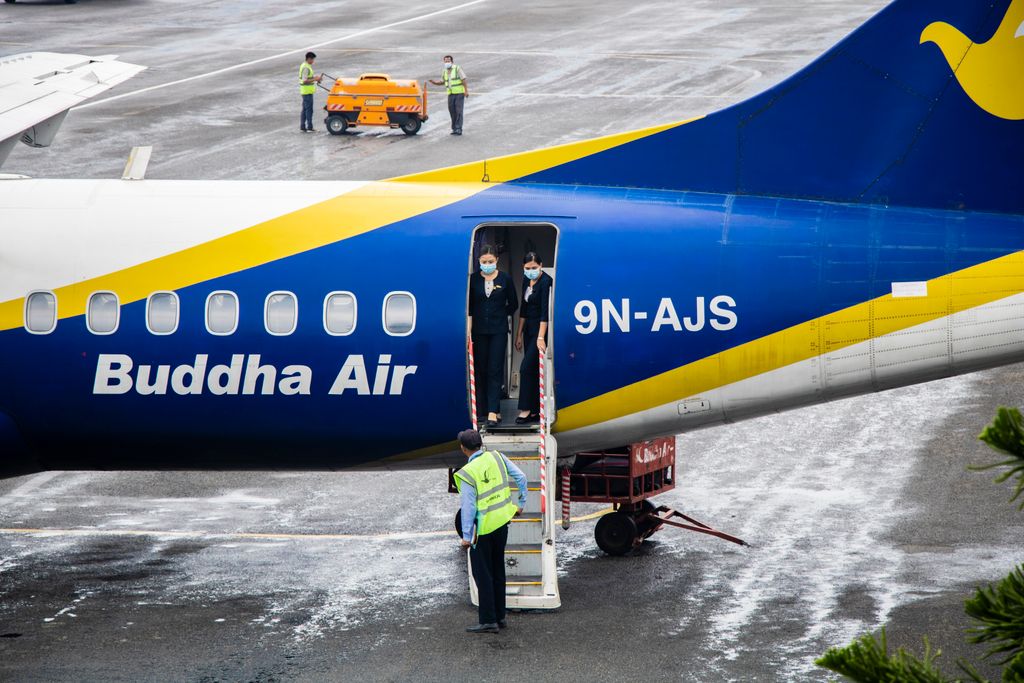
The standard route is a flight from Kathmandu (Tribhuvan International Airport, TIA) to Lukla. Flight time: approx. 35–40 minutes. Small aircraft seating 9–19 passengers (operated by Tara Air, Summit Air and others) and helicopters operate on this route.
An important change to our logistics: For the past few seasons, some flights to Lukla have been diverted from Kathmandu to Ramechhap (Manthali) Airport, which is about a 4–5-hour drive from the capital. This is particularly the case during the peak season (March–May and October–November), when traffic at TIA is too heavy. This means that the day before your flight, you may need to leave Kathmandu as early as 2:00–3:00 am, or, more often than not, leave the day before your flight.
Always check in advance where your flight is actually departing from – this has a direct impact on your plans for the day before, as well as on the price.
Cost of the flight
- Kathmandu → Lukla: approx. 260 USD one way (prices for foreign nationals)
- Ramechhap → Lukla: approx. 210 USD one way
- Flights are usually booked through travel agents or directly with the airline – advance booking is essential during the high season
Why are flights to Lukla so unpredictable?
Lukla Airport is usually open between 6.00 and 11.00, as wind and clouds in the afternoons often make it impossible to land safely. In practice, this means a few things:
- If the weather is bad in the morning, the flight is usually cancelled or postponed until the following day
- During the peak season, backlogs are growing – after just one bad day, the waiting time for a flight can increase by 2–3 days
- Simply being at the airport at dawn does not guarantee that your flight will depart
This isn’t an exaggeration or scaremongering. It’s simply the nature of the place, which you need to accept before you go.
An alternative – it is sometimes possible to fly by helicopter, even when conditions are unsuitable for aeroplanes. Such a flight is, of course, cheaper, and the price depends on a number of factors, usually ranging from 300 to 700 USD per person for a one-way flight.
Time buffer – how many days’ leeway do you need?
This is the aspect of planning a trek in the Khumbu region that is most often overlooked.
Minimum: Allow 1–2 days’ buffer at the start of the trip (in case of a delay to the flight to Lukla) and 1–2 days at the end (before the return flight from Poland).
In practice: Many experienced trekkers allow for three days’ leeway in their overall schedule. Not because they’re assuming the worst-case scenario, but because they know just how much Nepal can throw a spanner in the works of plans laid out to the day.
If you’re planning to return to Poland on a specific date and have no leeway – any delay to your flight to Lukla automatically becomes a serious problem. Changing intercontinental flights is expensive, and during peak season, alternative seats may not be available.
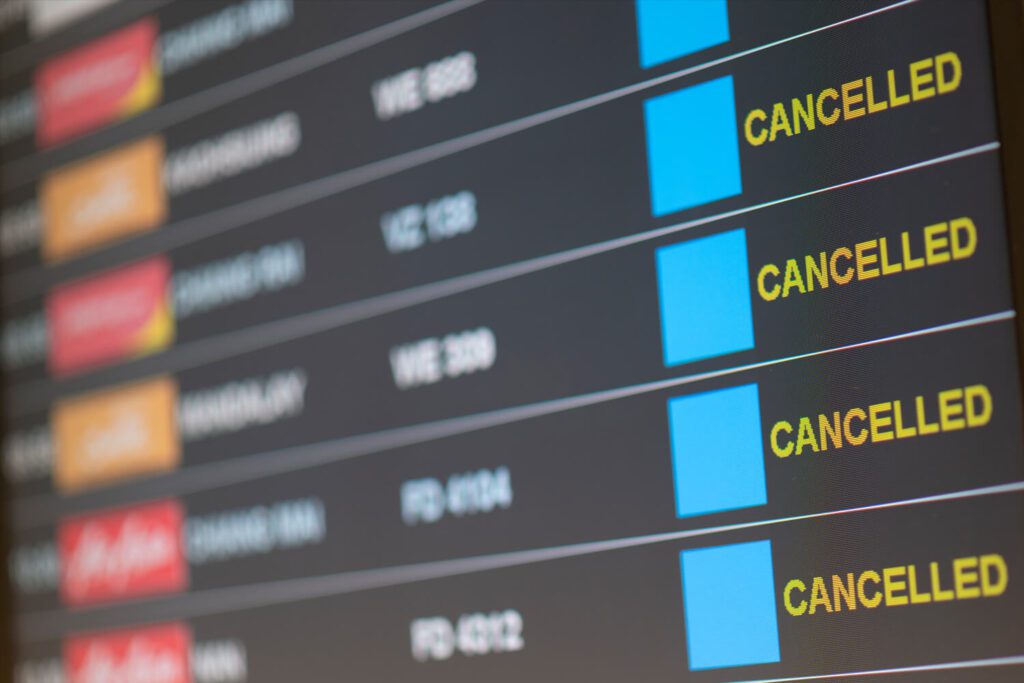
Plan B – what to do if your flight is cancelled?
It’s worth having a well-thought-out plan before you leave Poland, rather than improvising once you’re there.
Options:
- Wait and try again – the most common option, but it takes time and requires an extra night’s accommodation in Kathmandu or Ramechhap
- Helicopter – considerably more expensive (400–1,000+ USD), but often operates in conditions where aeroplanes cannot fly; availability depends on the operator and the season
- Overland route to Phaplu or Salleri – car + walking; takes much longer, but avoids the issue of flights altogether. Less commonly chosen, as it adds a few days to the trek
- Route change – if time is of the essence, consider another region (e.g. Annapurna, Langtang, Manaslu) that does not require a domestic flight
Booking flights – when and how?
- Booking: ideally through a licensed trekking agency in Nepal or directly via the Tara Air / Summit Air website
- When: During peak season (March–May, October–November), book at least 2–4 weeks before your planned flight, and preferably at least a month in advance
- Important: Flights are sold with a date but without a guaranteed time – the morning time slot is determined in advance by the weather
Is Khumbu a good area for a first trek?
It might work – but it’s not for everyone, and you need to be aware of the logistics.
Khumbu is for you if:
- you have more than two weeks and a realistic time buffer
- You cope well with uncertainty and changes of plan
- you’re specifically interested in the Everest region, and not just in „beautiful views of the Himalayas”
Consider another area if:
- You have a very limited amount of time, with no leeway
- this is your first time at altitude and you have serious concerns about trekking at altitude, and also – you prefer simpler logistics
- The stress caused by delays could ruin your trip
The Annapurna, Manaslu and Langtang regions do not require a domestic flight and are logistically easier for a first-time trip, but they also require preparation and a good plan.
The most common mistakes when planning flights to Lukla
- The return flight from Poland immediately after the planned departure from the trail – one bad day’s weather and the whole plan goes out of the window
- Failure to specify the departure point – Ramechhap is a completely different story when it comes to logistics compared to Kathmandu
- No budget for additional accommodation – a delay isn’t just about time, but also about money
- The assumption that booking early = a guaranteed flight – a ticket bought a month in advance does not protect you from the weather
- Plan for a day without a buffer – in Khumbu, that’s asking for trouble
FAQ
Do flights to Lukla operate all year round? The airport is open for most of the year, but in winter (December–February) and during the monsoon season (June–August), conditions are more challenging and there are more flight cancellations. The peak season is March–May and October–November.
Is it possible to walk to Lukla instead of flying? Yes – from Salleri or Phaplu, but that’s an extra 3–5 days’ walk. Rarely used, but a good option as a fallback plan or for those who want to avoid domestic flights.
How much does hand luggage weigh? Most airlines allow around 15 kg of luggage per passenger. Excess baggage isn’t expensive, but it’s worth noting that weight limits on flights are strictly enforced; if travellers and their luggage exceed the limit, some of the luggage won’t make it on that flight.
Does the insurance cover the costs of a delay? Standard travel insurance policies do not usually cover the costs of domestic flight delays in Nepal. Check your policy before you travel and make sure it includes helicopter rescue – that is far more important.
Is it possible to book flights to Lukla online from Poland? Technically, yes, via the Tara Air or Summit Air websites, but in practice it’s easier and safer to book through an agency, which also handles any changes.
Summary
Flights to Lukla are one of those planning elements that look straightforward on paper, but in practice can make or break the whole trip. It’s not about being afraid of them – it’s about building a realistic buffer into your plan and knowing what to do if something goes wrong.
Khumbu is well worth the effort. You just need to approach the trip with the right expectations and a flexible schedule. Are you planning a trek in the Everest region and want to sort out the logistics from the start? Get in touch with us – we’ll help you draw up a plan that won’t fall apart at the first sign of a delay
