

There are those who like to travel during the peak season, and those who prefer to travel in the off-season. Whichever type of travel you prefer, it’s worth knowing that, When is the trekking season in Nepal?, to choose the option that suits you best.
The trekking season in Nepal – when is the best time to go?
Traditionally the trekking season in Nepal It begins in mid-February and lasts until mid-May, and then from late September to mid-December. The most popular months for mountain trekking in the Nepalese Himalayas are: March, April, October and November. That’s when the weather is at its sunniest and the air is at its clearest, offering the best chance of spectacular views. Of course, no one can guarantee perfect weather, but statistically speaking, that’s when conditions are at their best.

Travelling out of season – is it worth it?
Some travellers choose to travel outside the peak season. This makes sense not only because there are fewer people in the mountains, but also because it is cheaper. Off-season prices for hotels and guesthouses Prices are usually lower, and there are more rooms available. Outside mountain resorts – for example, in Kathmandu or the Nagarkot resort – accommodation in a good-quality hotel can be up to 50% cheaper than during the high season. If you decide to travel out of season, you must be prepared for a higher risk of rain or snow, particularly above 3,000 metres above sea level (in the second half of December, January and February). During these months, be sure to pack extra warm clothing and a sleeping bag that will keep you comfortable in sub-zero temperatures.
The weather in Nepal – the monsoon and the trekking season
Around June, the season begins in Nepal monsoon, which lasts for at least three months and usually comes to an end in early or mid-September. During this period, rainfall increases significantly, with rain falling almost every day, often very heavily. In many areas, this causes disruption to transport, particularly where the road infrastructure is less developed. Flooding and landslides occur, sometimes posing a serious threat. For safety reasons, travelling to mountainous regions during the monsoon season is not recommended.
During this time, however, you can still easily visit the country’s lowland regions, which are full of interesting sights, as well as its multicultural capital – Kathmandu and the place where the Buddha was born – Lumbini. In January and February, we also recommend a visit to the park Chitwan, where it’s warm, but pleasant enough to experience the exotic charm of the tropics.
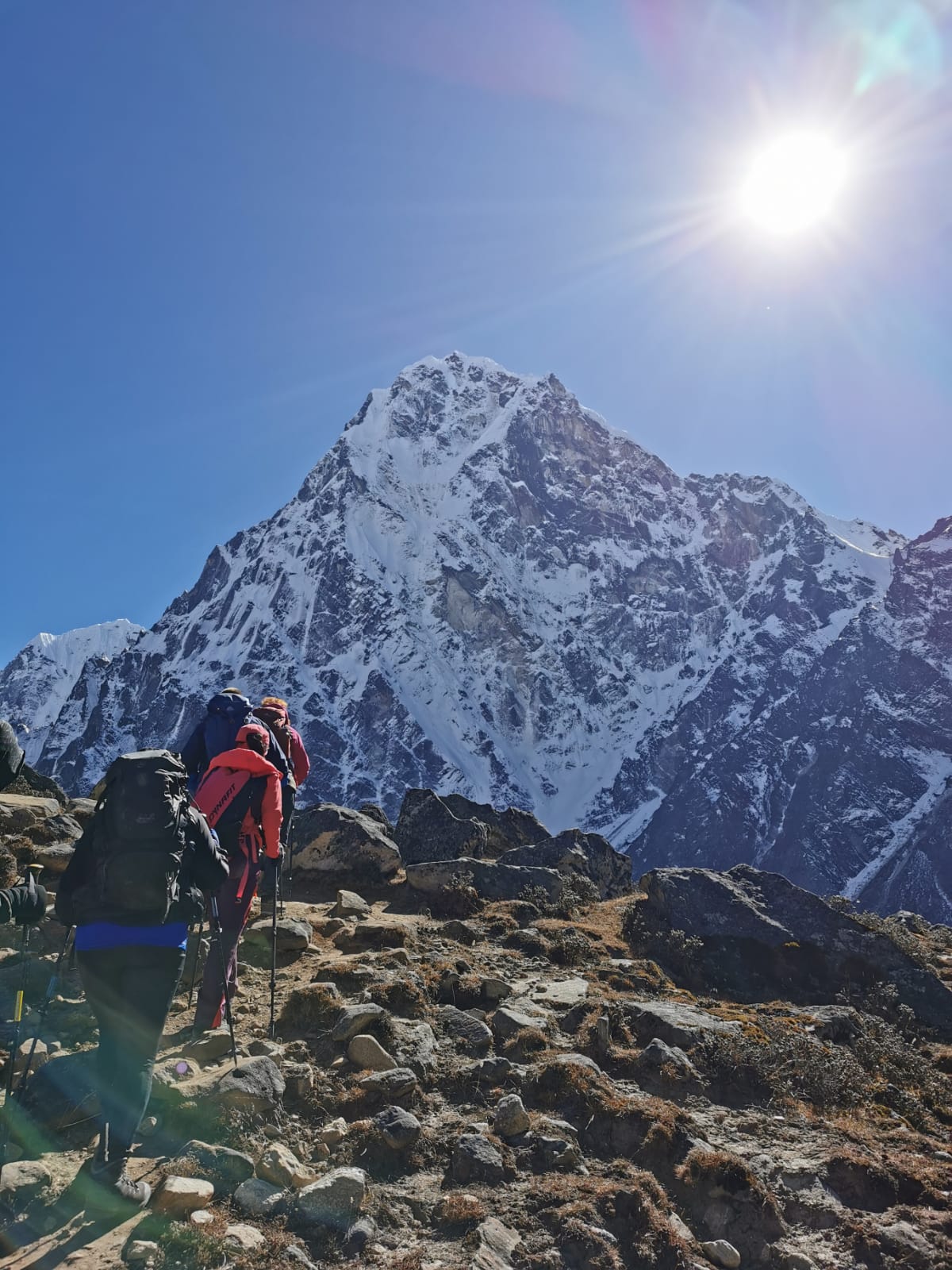 The weather in Nepal, the trekking season.
High-altitude expeditions and treks
If you are planning an expedition to seven- and eight-thousand-metre peaks, the departure date is arranged on an individual basis and depends on the participants’ plans and experience. It is worth consulting an experienced organiser, who will help you choose the best time for the expedition.
 Larkya Pass, Manaslu. Impossible to cross, even for Nepalese people. Early October 2022. An unprecedented situation.
Climate change and weather anomalies in Nepal
Climate change is very real in Nepal too. Scientists warn that parts of the country may become uninhabitable within our lifetime. Natural disasters, such as floods and landslides, are becoming increasingly frequent. Take last season, for example, when the monsoon did not end until around 10 October, which is unusual – just a few years ago, the weather was already relatively good by the end of September. These anomalies meant that many travellers had to change their trekking plans, and some destinations became inaccessible or too risky.
We can expect similar situations in the future, so it’s always a good idea to check the current weather conditions and any hazards before setting off – don’t take any unnecessary risks!
Practical advice – how to plan a trip to Nepal?
- Check the trekking season and choose the date that best suits your needs.
- Off-season You can expect lower prices and fewer crowds, but be prepared for harsher weather conditions.
- Avoid the monsoon in the mountains – at this time of year, it’s better to explore the lowlands and towns.
- Always check the weather forecast and discuss your plans with an experienced organiser.
- Make sure you have the right equipment – especially if you’re travelling out of season or to higher altitudes.
If you’d like to discuss your plans or have any questions about the best time to travel to Nepal, please do get in touch! We always recommend safe options and highlight any risks, and we plan our trips for the times of year which – based on our many years of experience – are the best.
Are you planning a trek or an expedition to Nepal? Check out the latest range of expeditions on the website:
👉 https://merowayadventure.com/wyprawy/
and plan your trip for the best possible time!
See you on the trail!
