

An expedition to the eight-thousander Manaslu (8,163 m)
Manaslu (8,163 m) It is the eighth-highest peak in the world and one of the most sensible choices for those planning to climb an eight-thousander. It combines a high success rate, a relatively safe standard route and the full-fledged nature of a high-altitude expedition. Ideal – your first eight-thousander.
An expedition to Manaslu is neither a high-altitude trek nor a straightforward commercial trip open to everyone. It is a full-on Himalayan expedition, including acclimatisation, camp logistics, the work of the high-altitude team, and prolonged operations at altitudes of between 5,000 and 8,000 metres.
Taking part in the expedition requires adequate physical fitness, mountaineering experience and a readiness to operate in high-altitude conditions, where the decisions taken during the expedition are of crucial importance.
This is an undertaking that requires commitment from both sides – both from the organiser, who is responsible for logistics, safety and support for the team, and from the participant, who takes responsibility for their own preparation, fitness and the decisions they make in the mountains. The expedition is intended for people who are aware of the nature of high-altitude activities, understand the risks associated with altitude and are prepared to work as part of an expedition team.
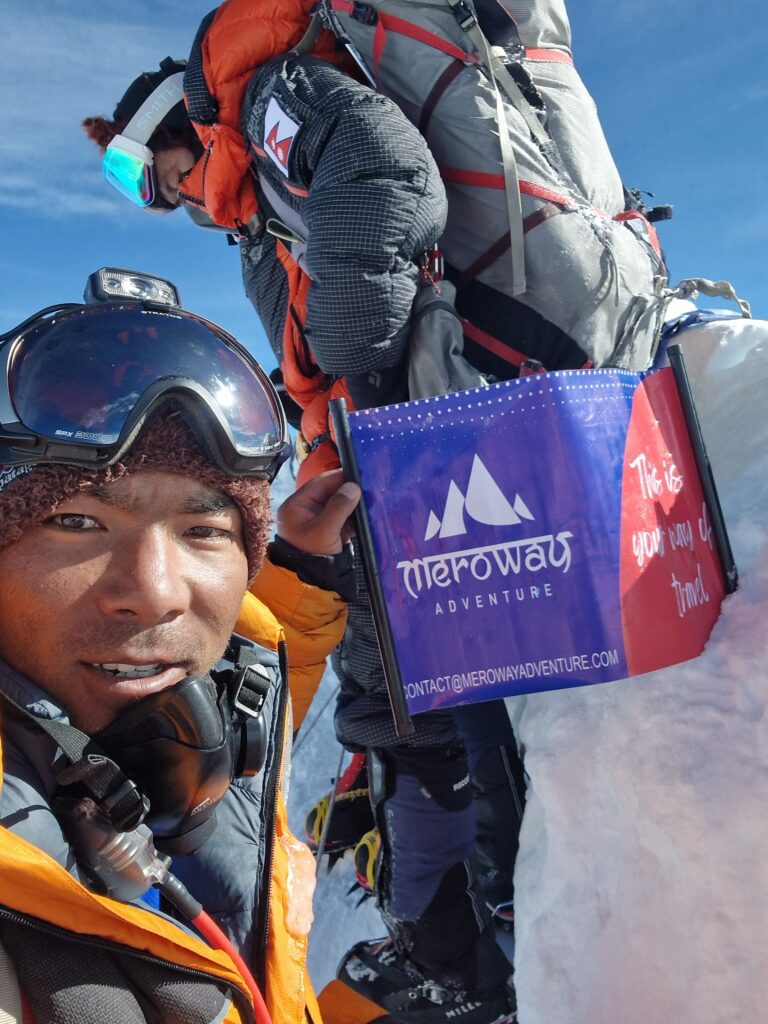
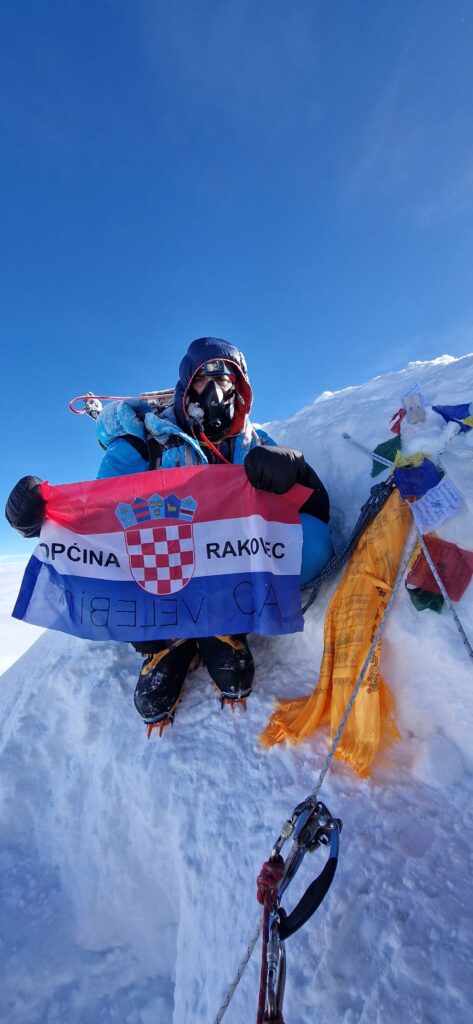
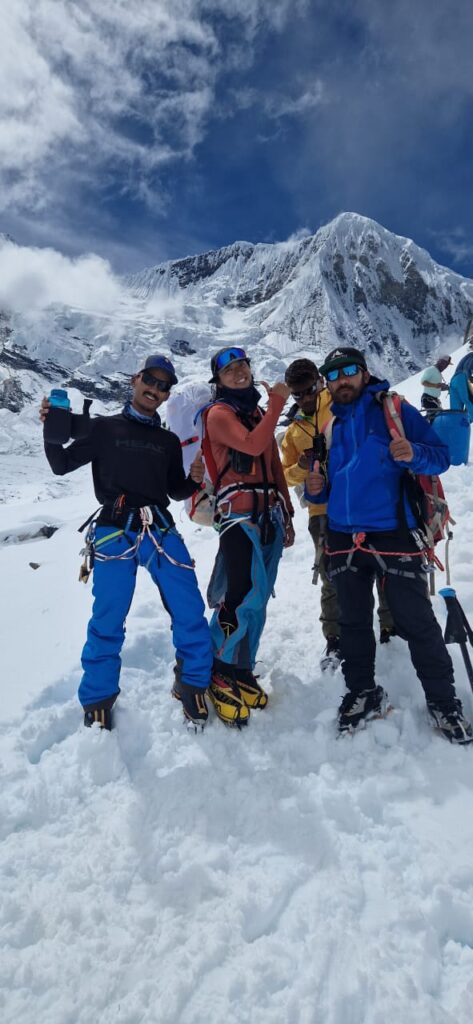
Manaslu – the character of the mountain
Manaslu is regarded as one of the more accessible eight-thousanders, but it remains a high and demanding mountain. The crux of the climb takes place in the ‘death zone’, and success depends on acclimatisation, weather conditions and decisions made during the expedition, as well as the proper organisation and experience of the team supporting the climber throughout the expedition. Compared to other eight-thousanders, Manaslu:
- offers a relatively stable and predictable normal course
- has a lower density of expeditions than on Everest
- enables you to gain experience at an altitude of 8,000 metres
At the same time, the mountain remains, where the following are key:
- height
- changeable weather conditions
- prolonged exposure to an extreme environment
An expedition to Manaslu is a genuine and demanding high-altitude challenge, not an „easy” eight-thousander.
The nature of the expedition
The programme comprises approximately 45 days in Nepal (with the option to shorten the trip if conditions are favourable, or to extend it on request), which allows for a reasonable period of acclimatisation and gives you the freedom to explore the mountain without unnecessary stress or rushing. It has been planned to ensure:
- gradual acclimatisation
- a sufficient number of rotations
- flexibility in operating within a weather window
The approach to base camp is via the Manaslu region, using private transport to Machha Khola, which shortens the trek without compromising acclimatisation, whilst utilising the most convenient road link currently available for participants to reach the trekking route.
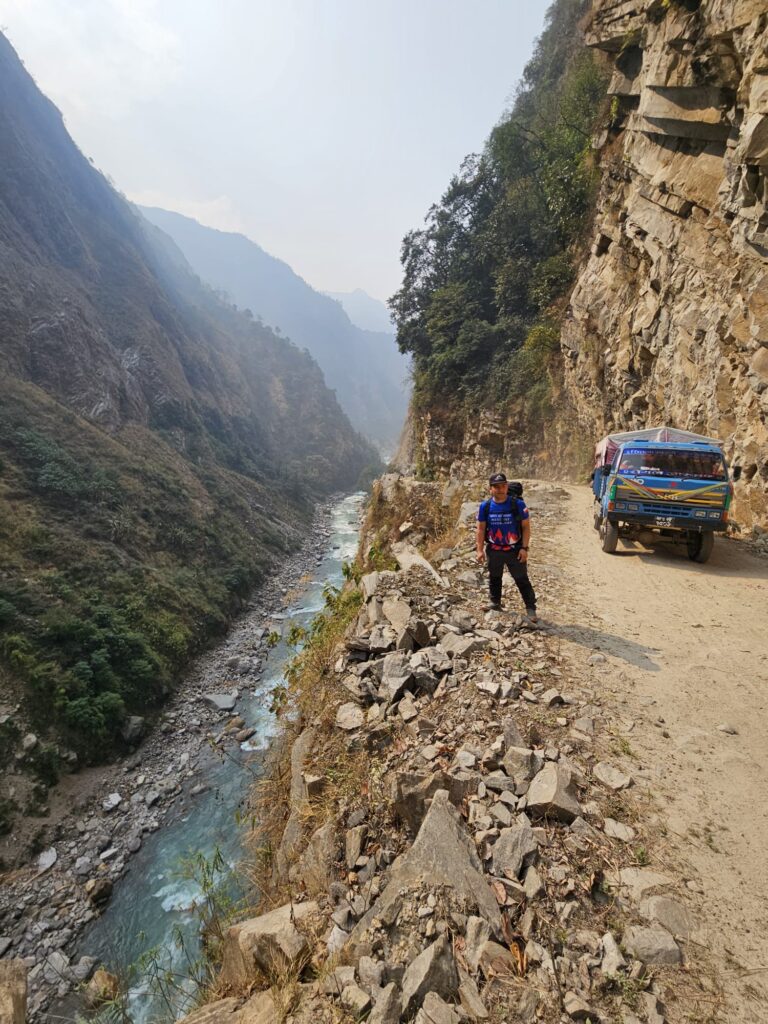
The approach to Manaslu – trekking and acclimatisation
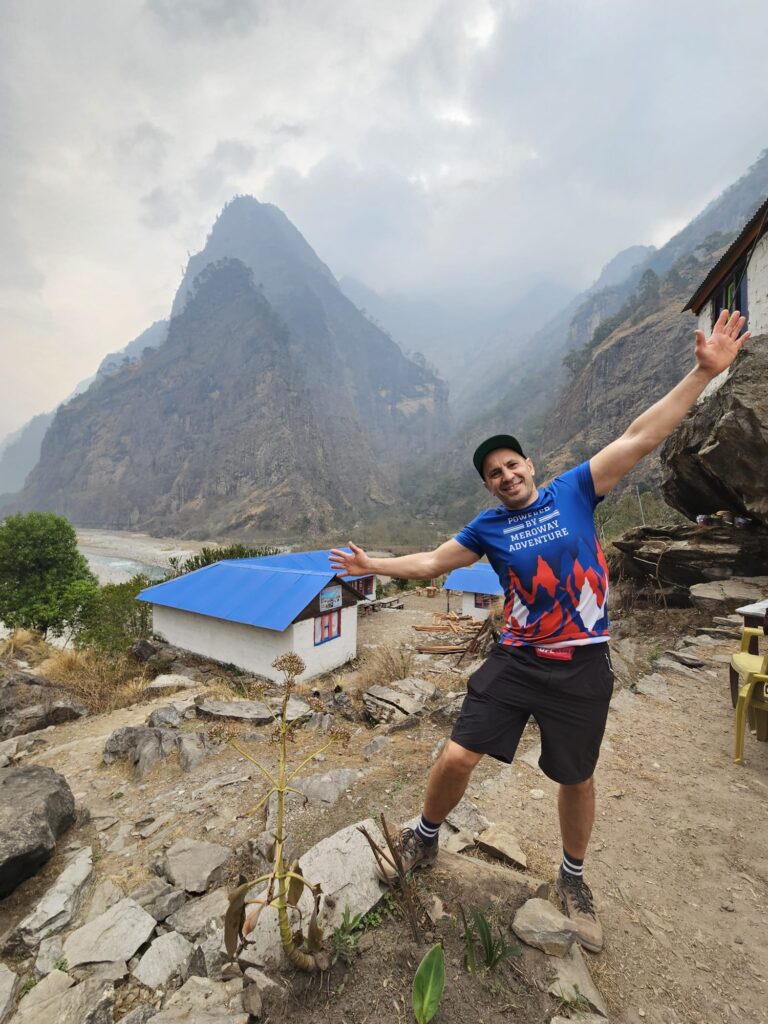
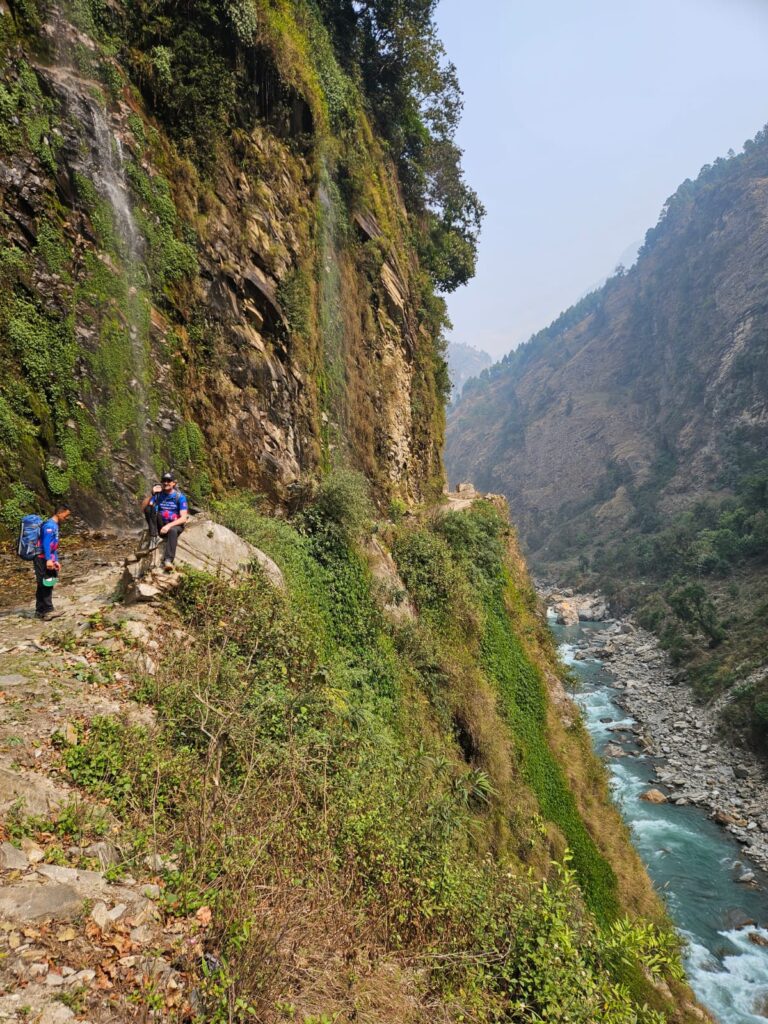
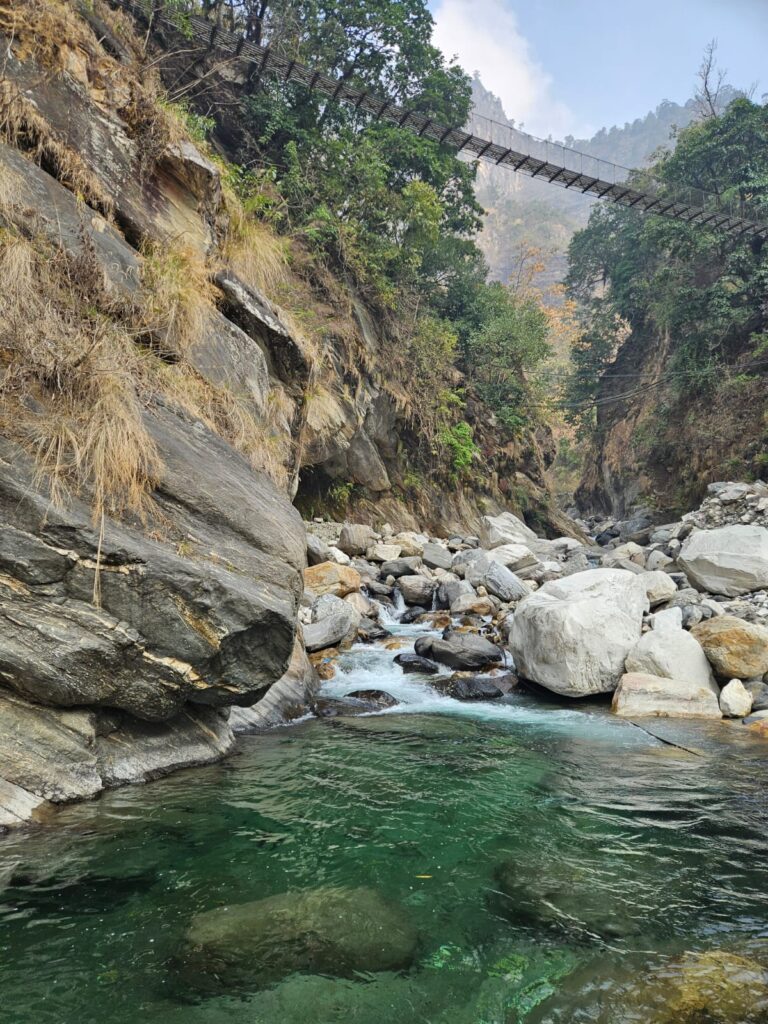
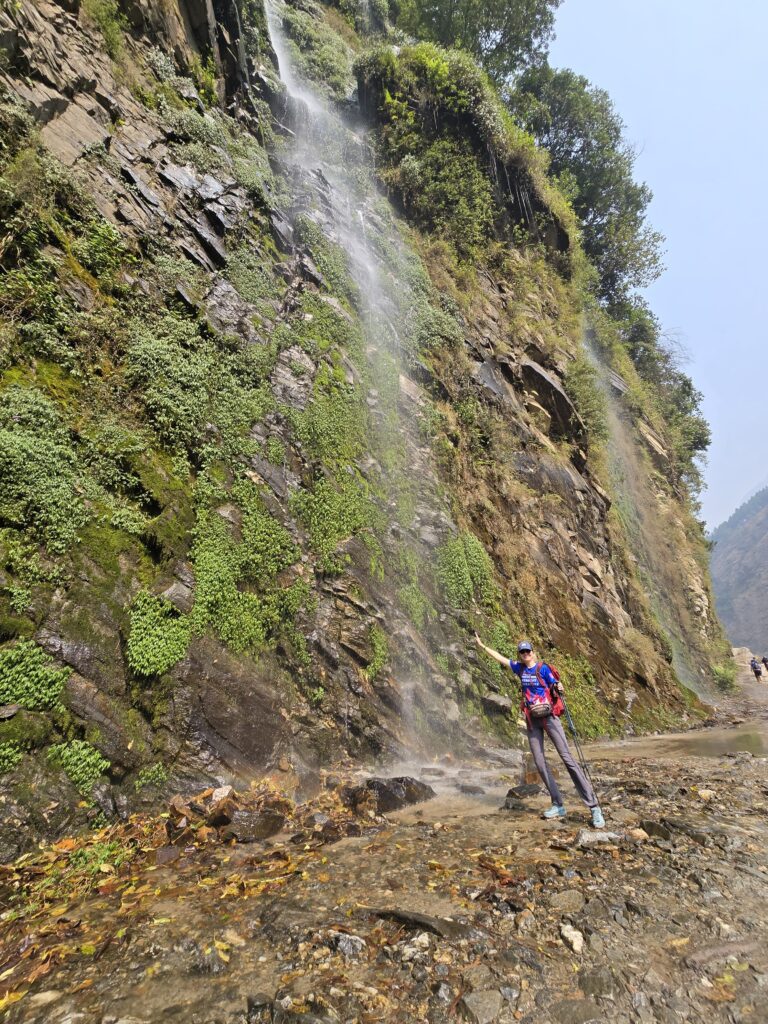
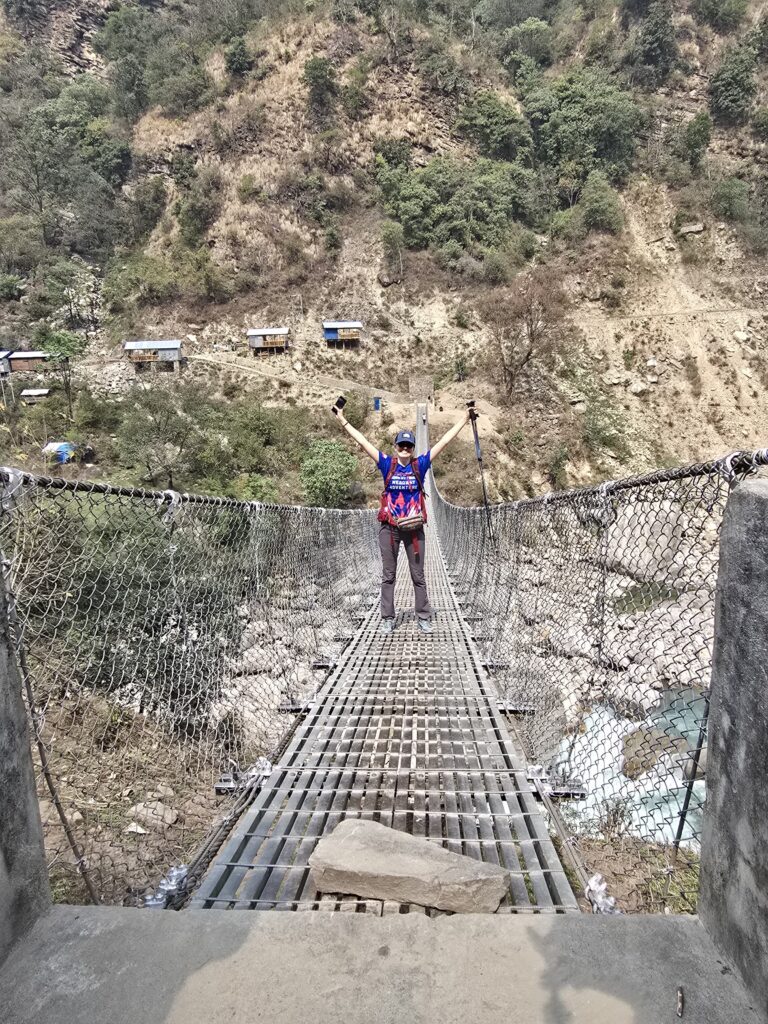
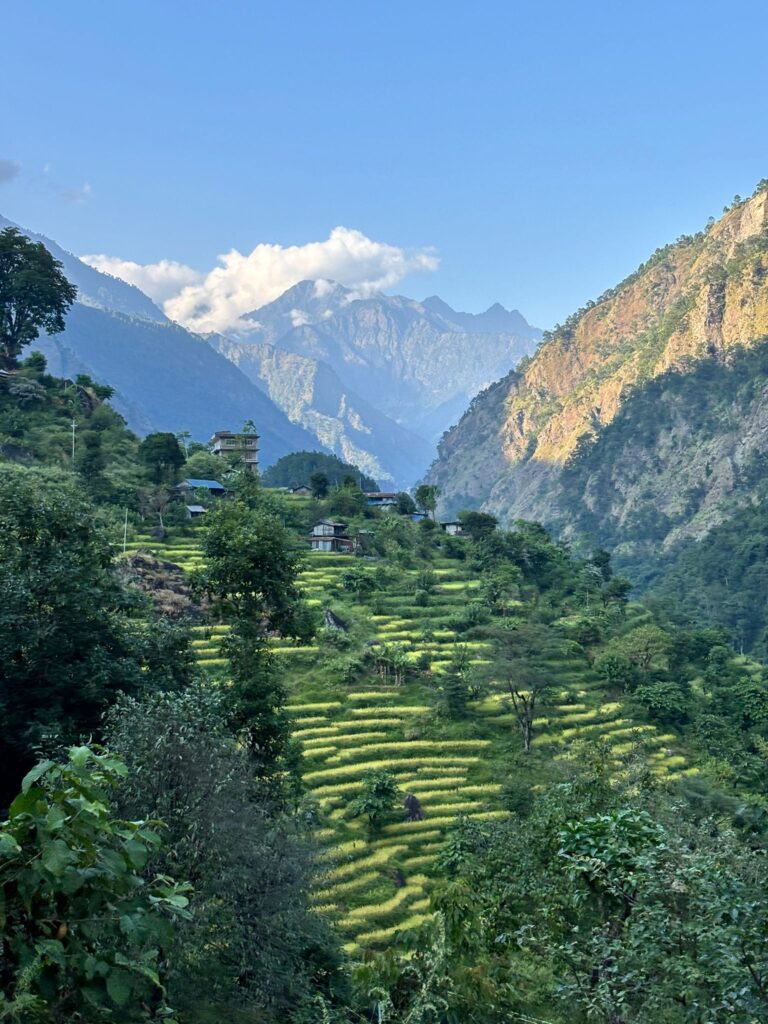
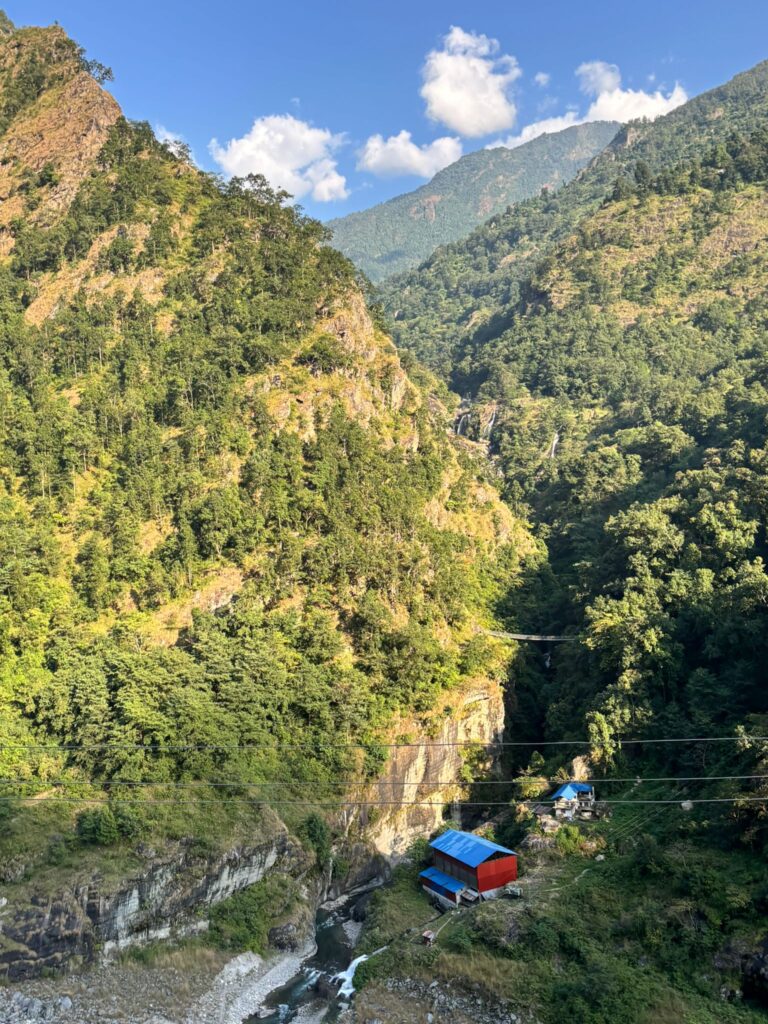
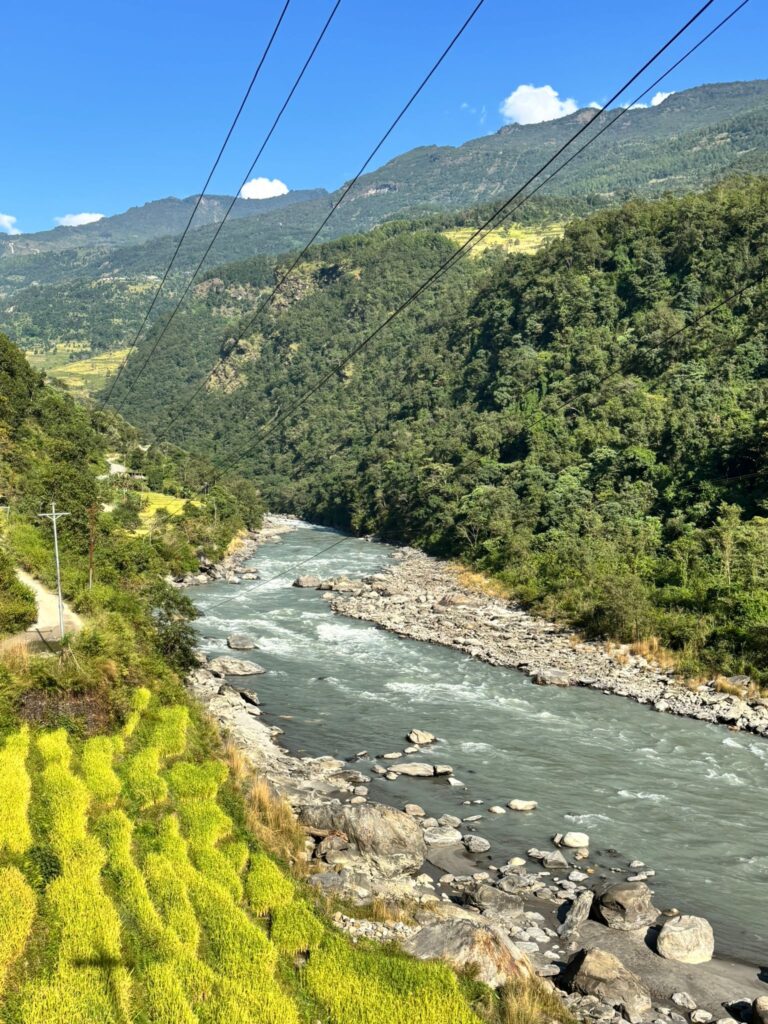
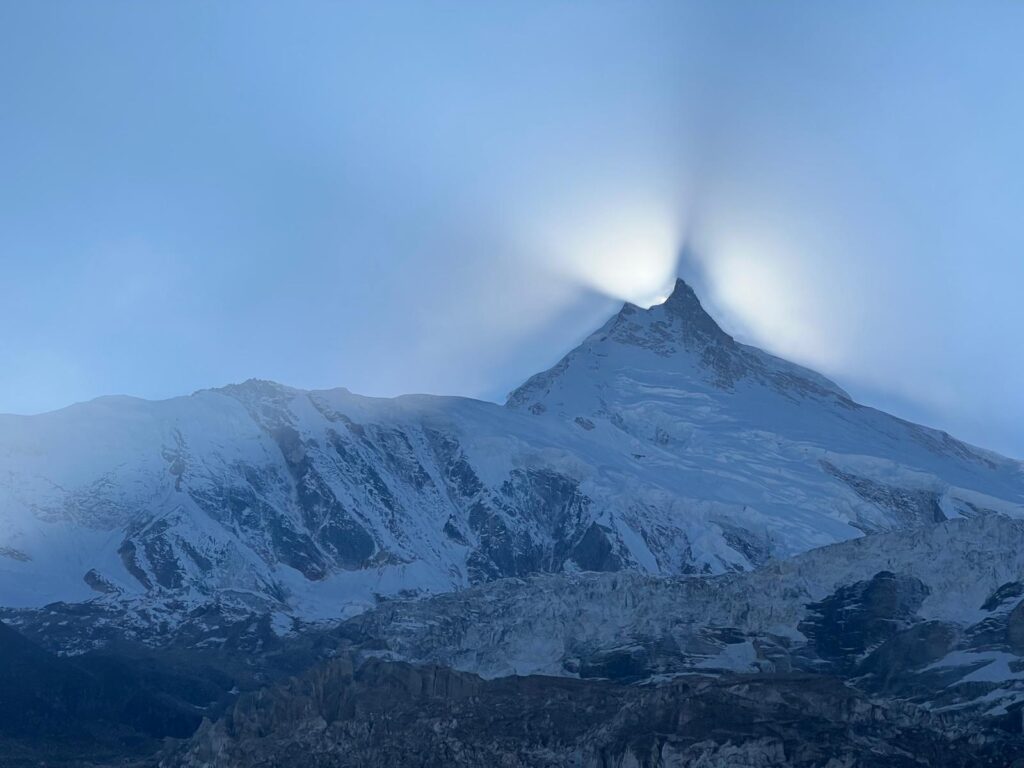
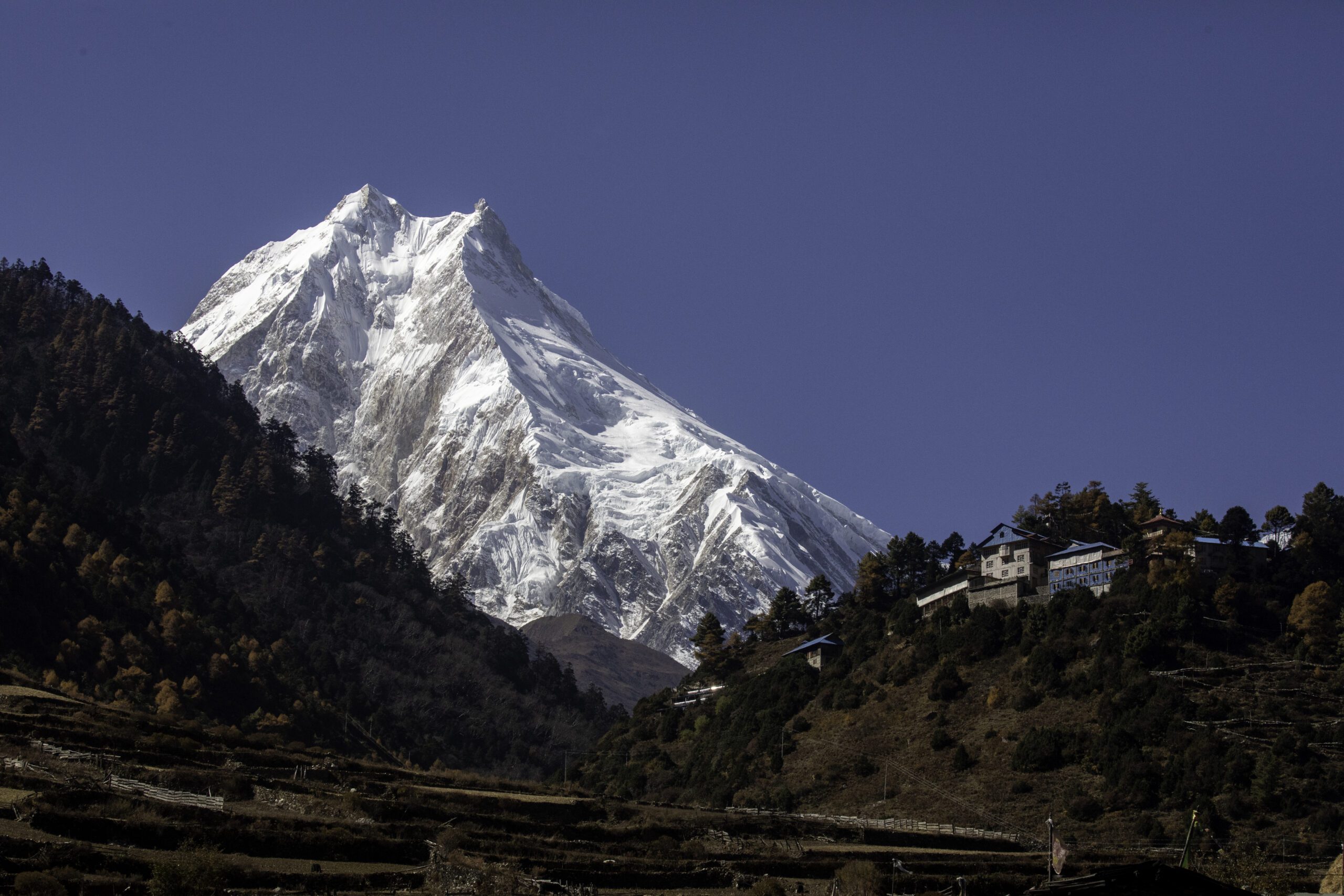
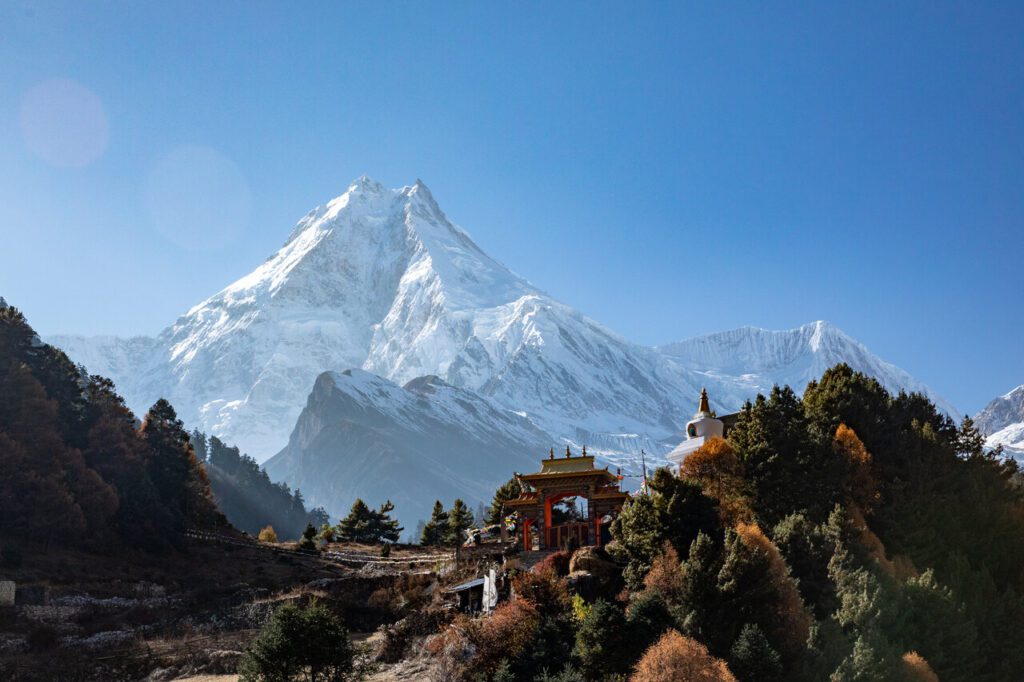
The first stage of the expedition is a trek lasting several days in the Manaslu region, leading to the base camp at the foot of the mountain. The route passes through one of the less-travelled parts of Nepal – river valleys, suspension bridges, terraced fields and high-altitude villages. Unlike the popular trails, the trek to Manaslu has retained its more rugged character. The landscape changes with each passing day, ranging from subtropical vegetation to open, high-altitude expanses overlooking the Manaslu massif. The ascent is organised in a way that allows for proper acclimatisation in line with the recommendations:
- Daily excesses are monitored
- the pace is tailored to the team
- Accommodation is provided in hostels
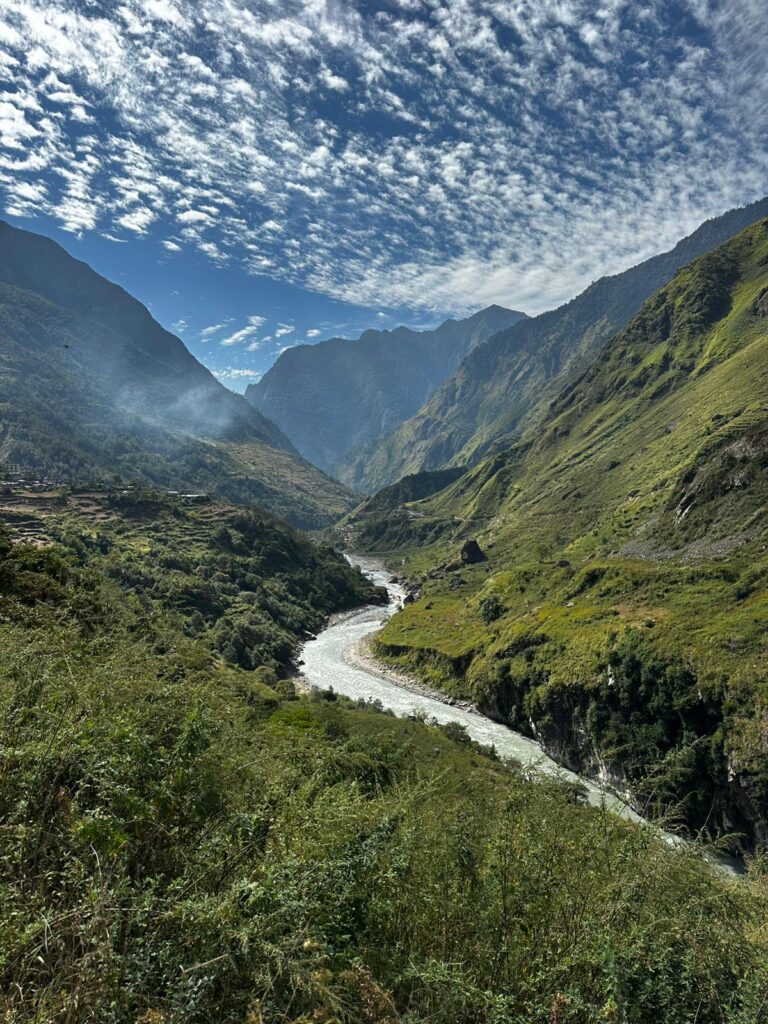
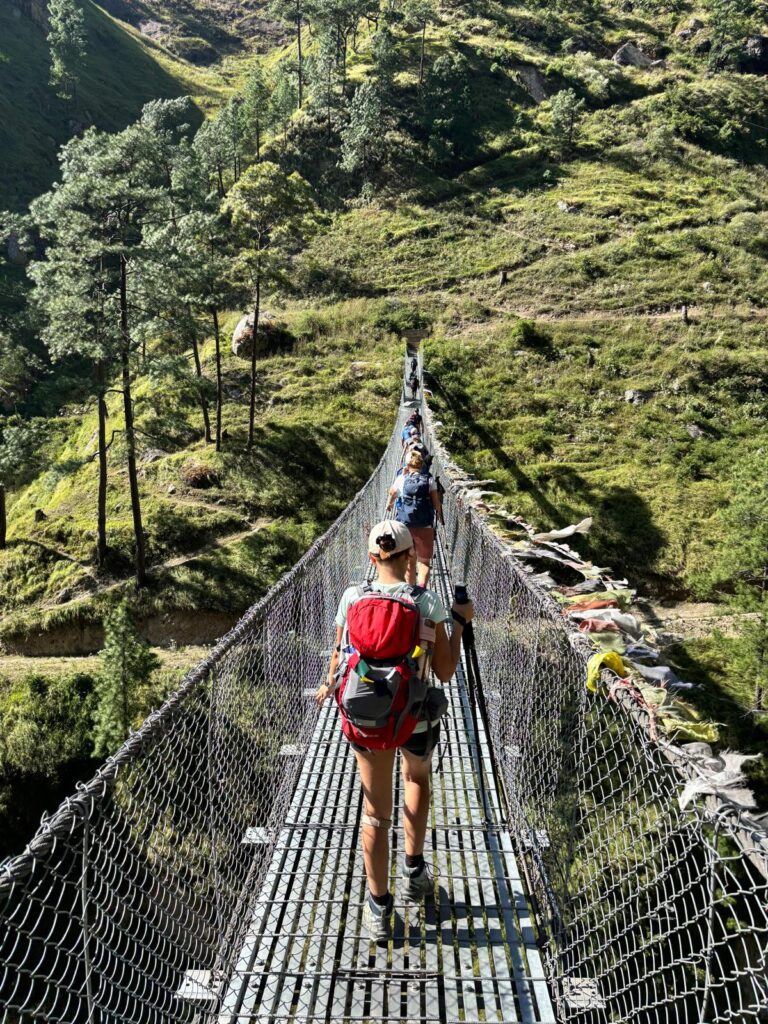
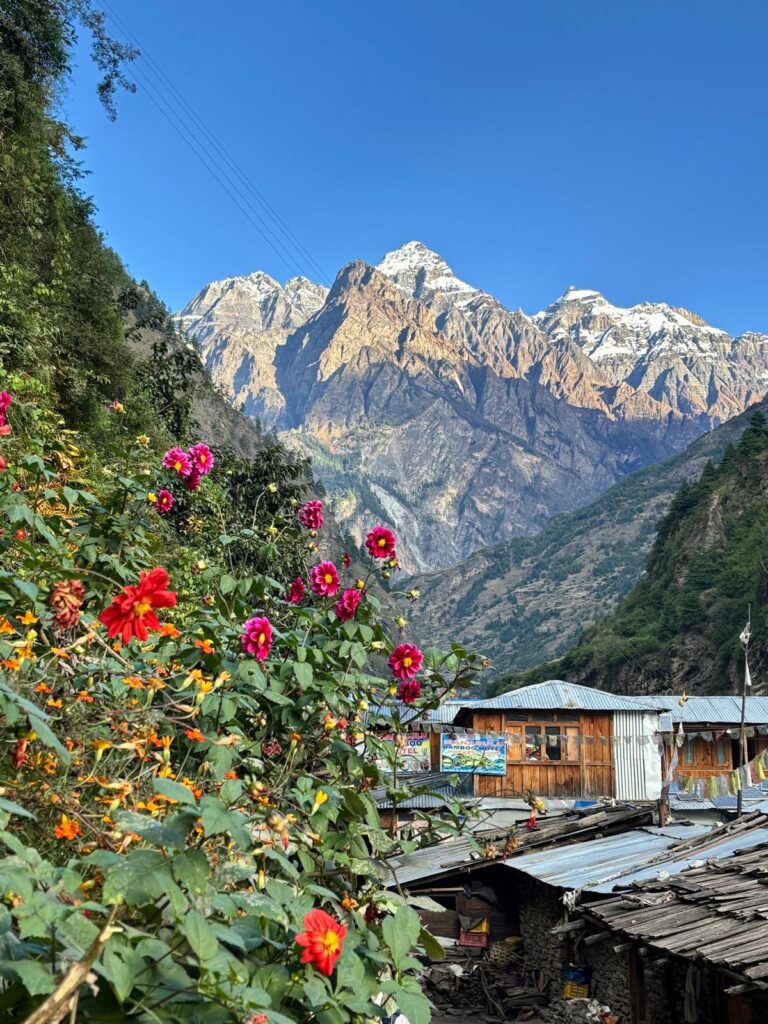
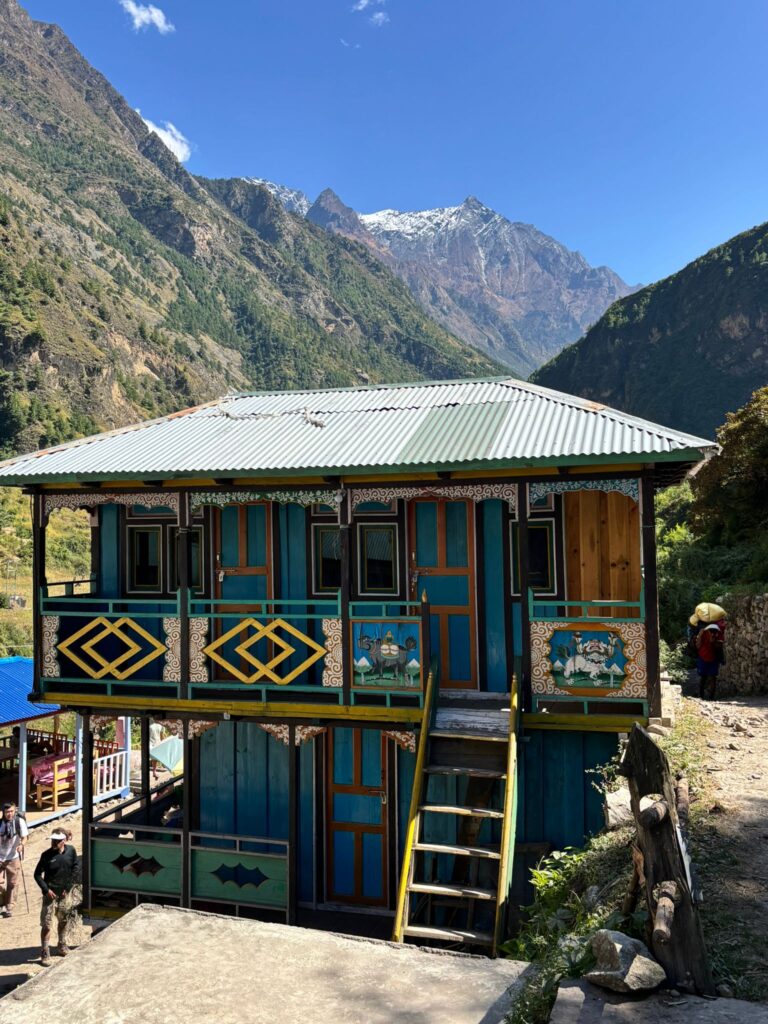
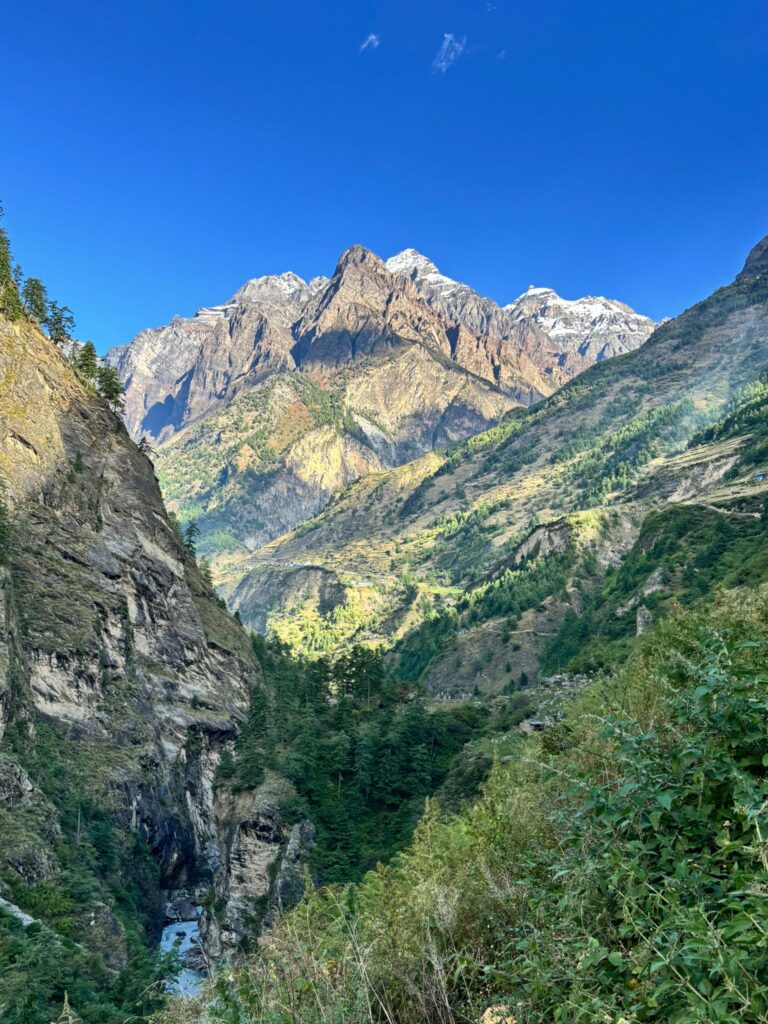
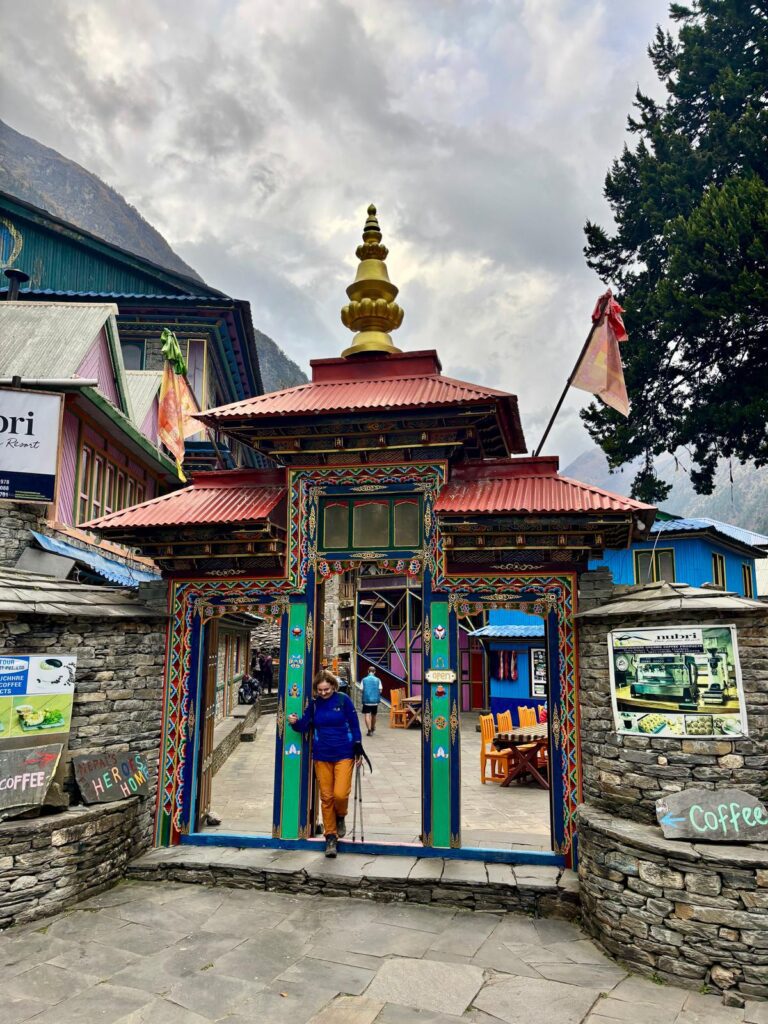
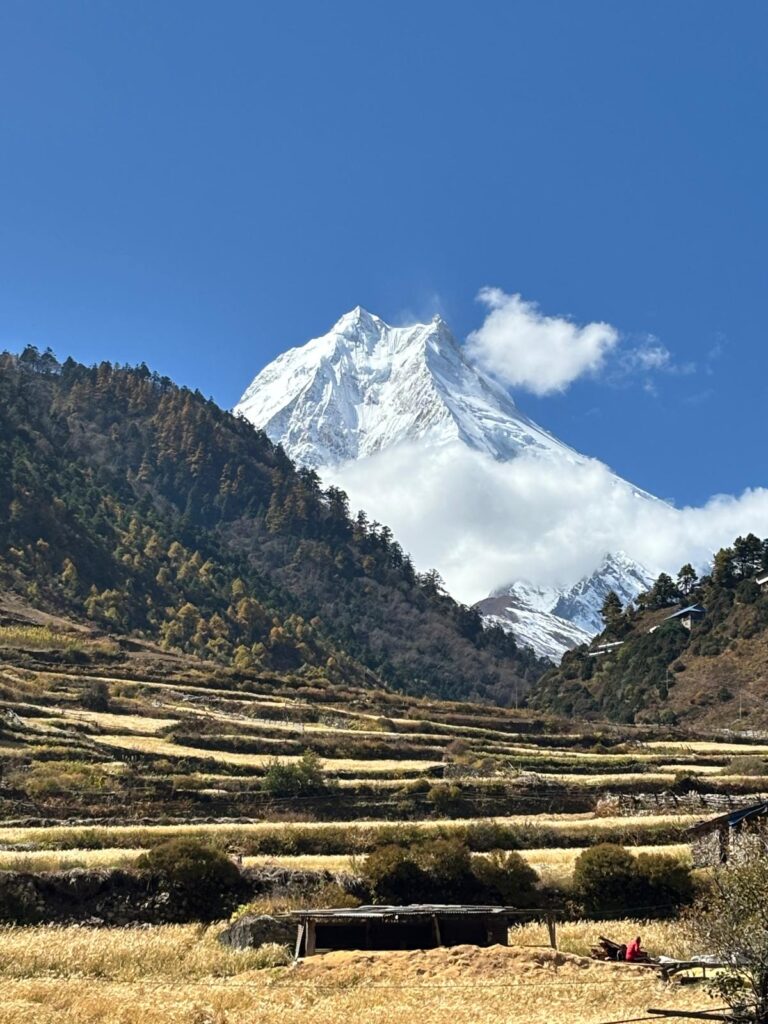
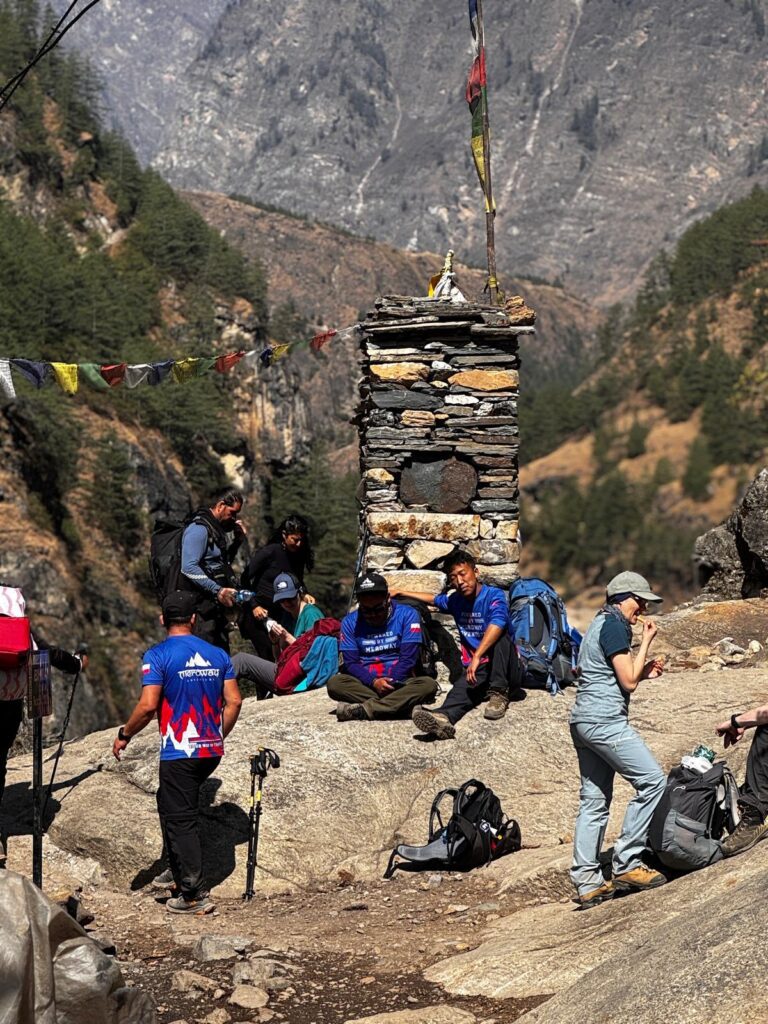
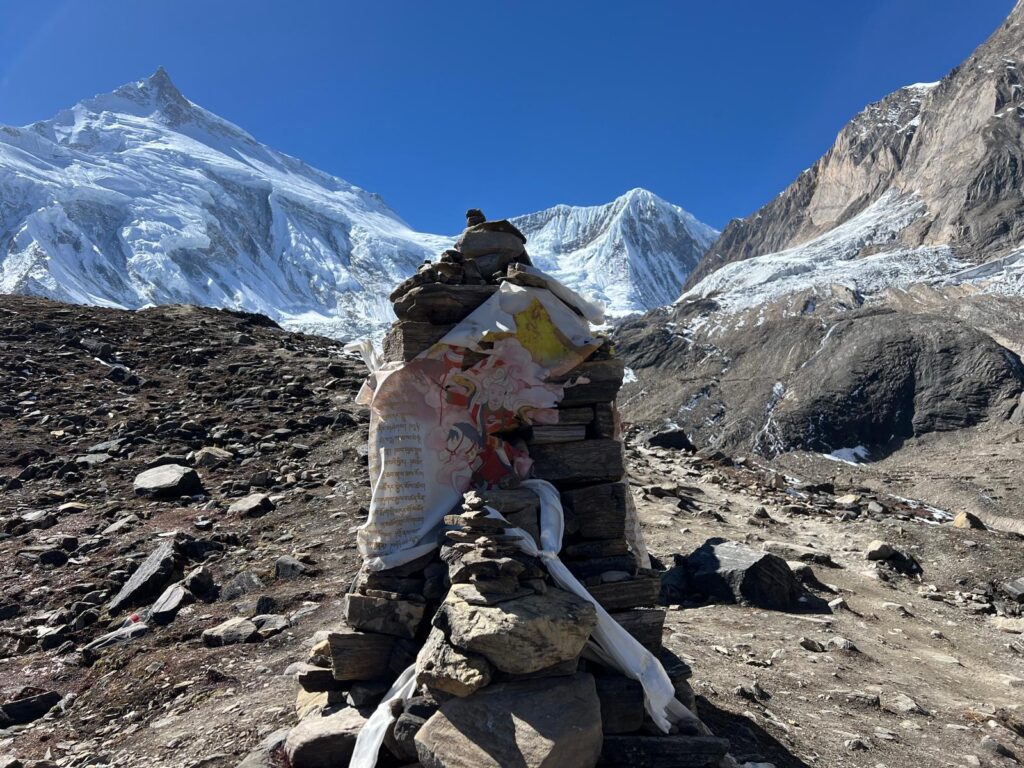
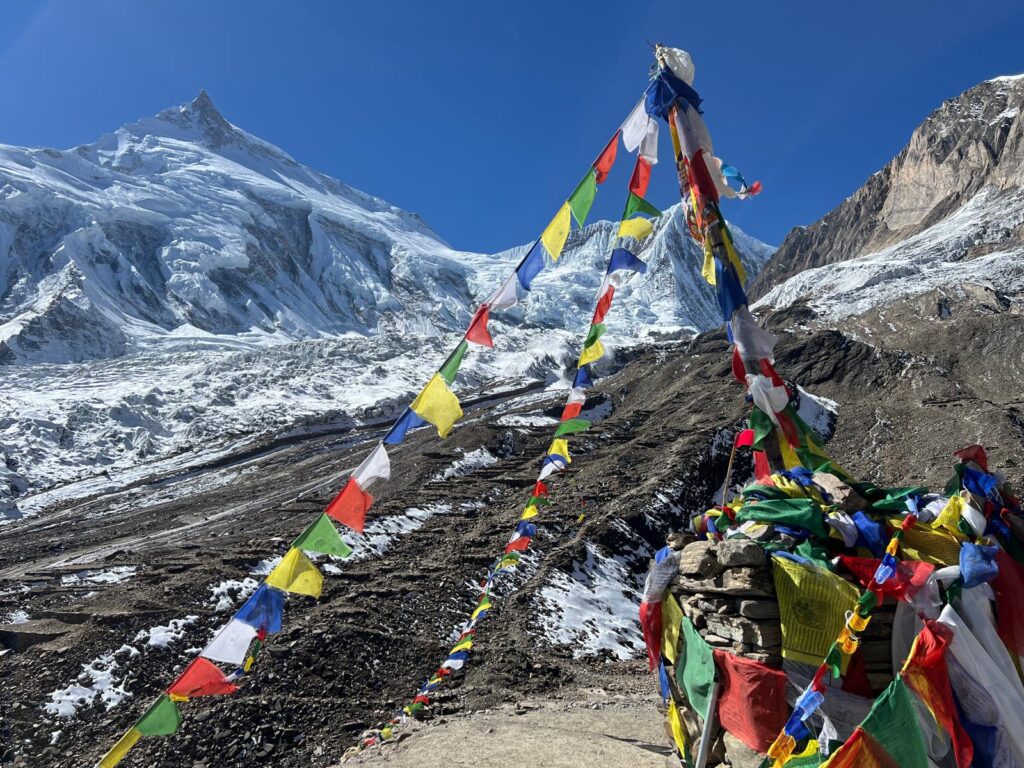
The final stage of the trek is reaching Sama Gaon (3,780 m) – a key acclimatisation point, where we spend an extra day before heading higher up. This is the point where the classic trek ends and the actual expedition begins.
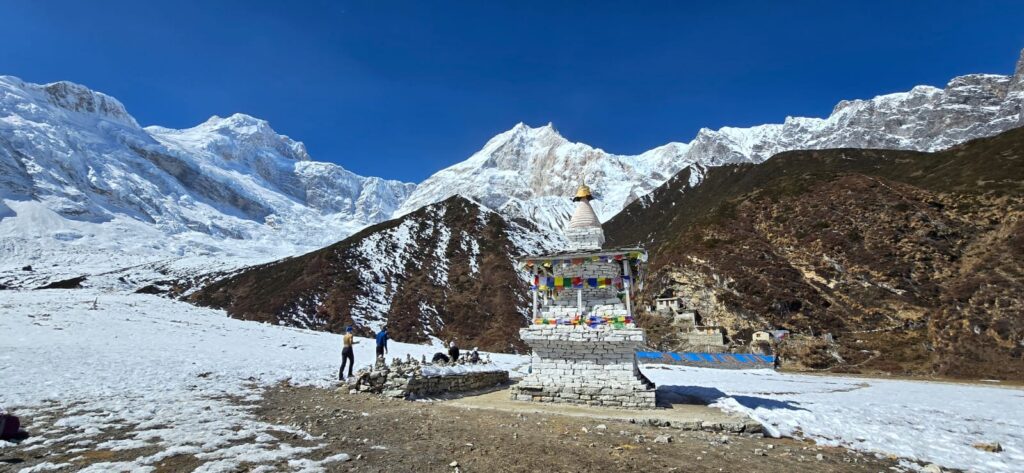
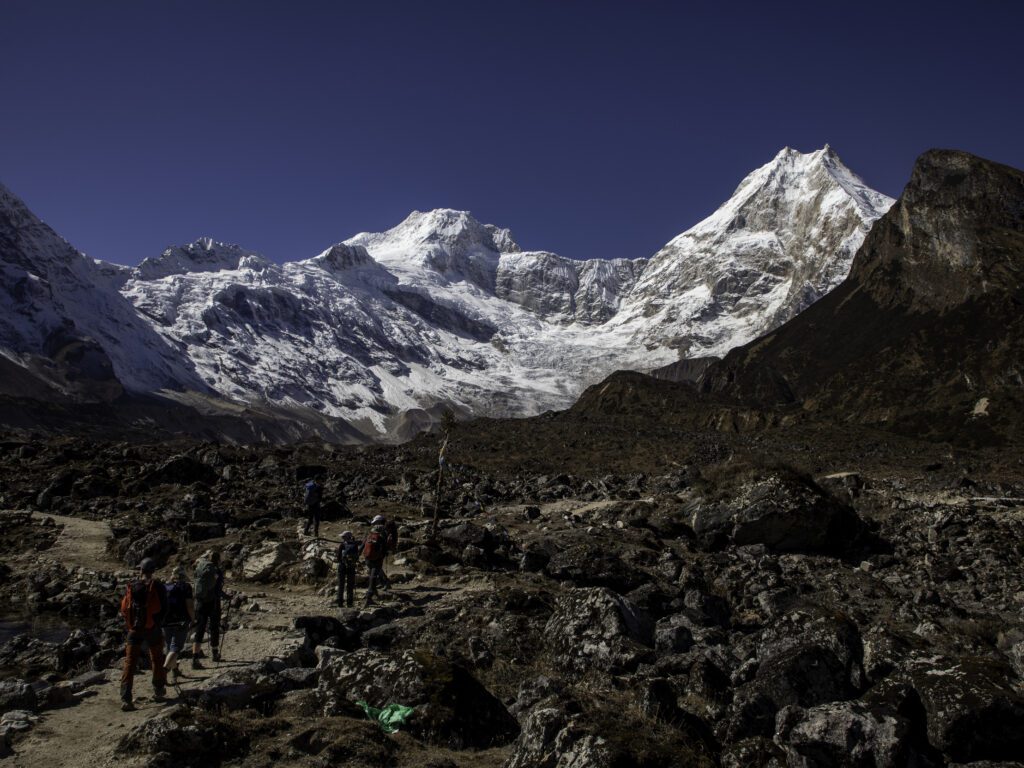
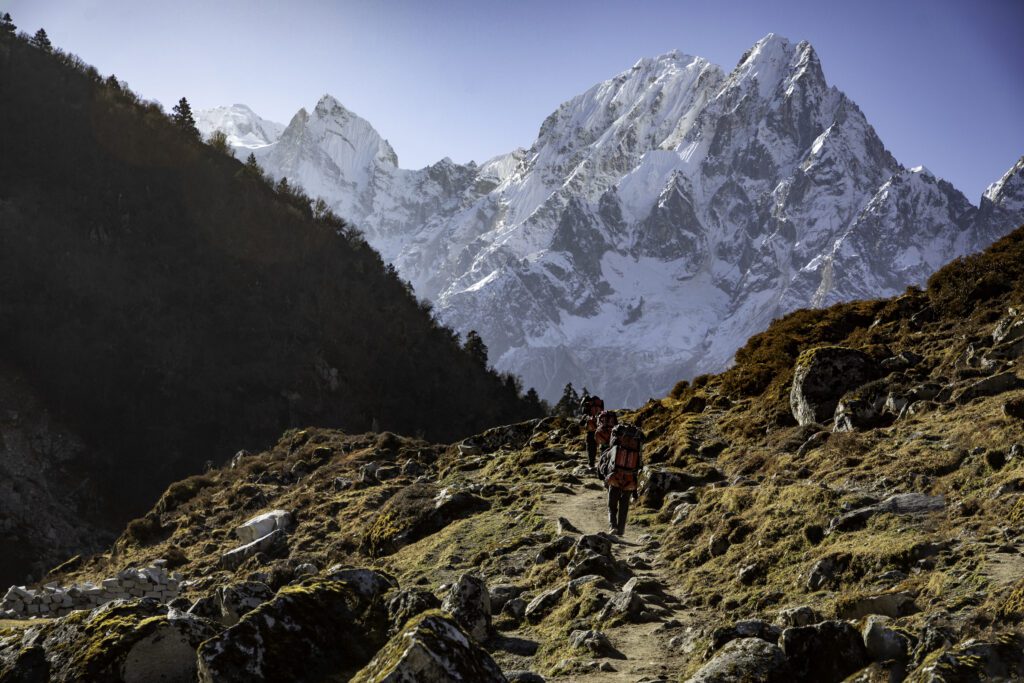
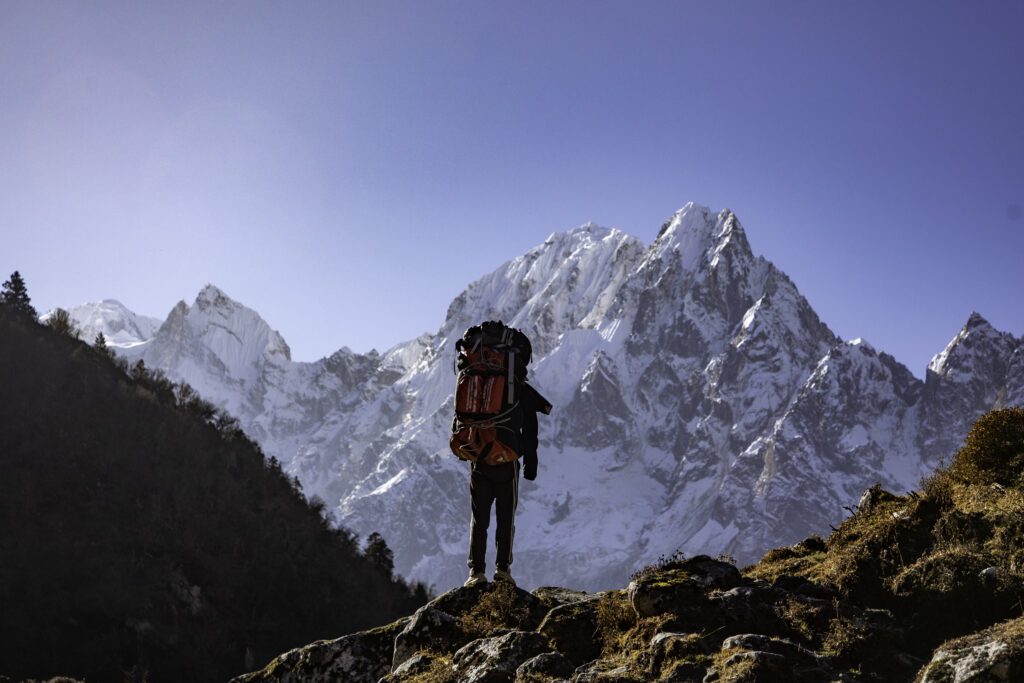
Journey to Base Camp and the start of the expedition
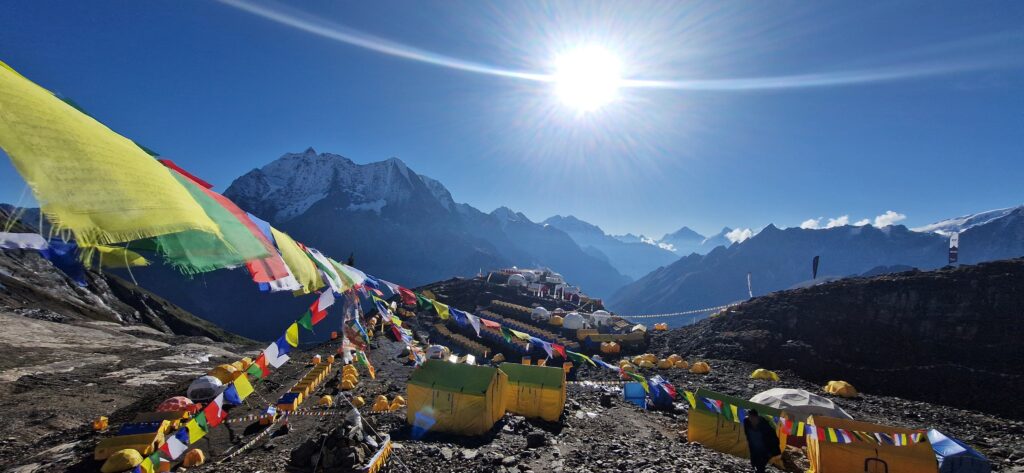
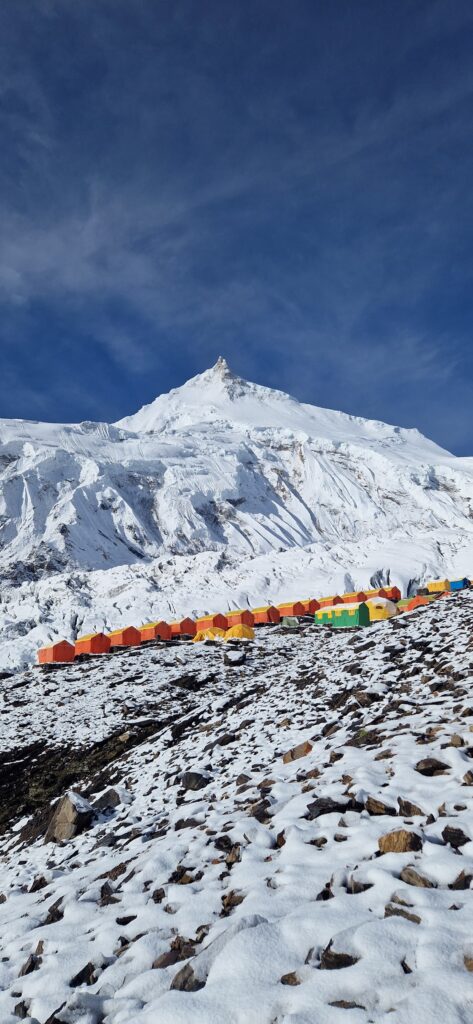
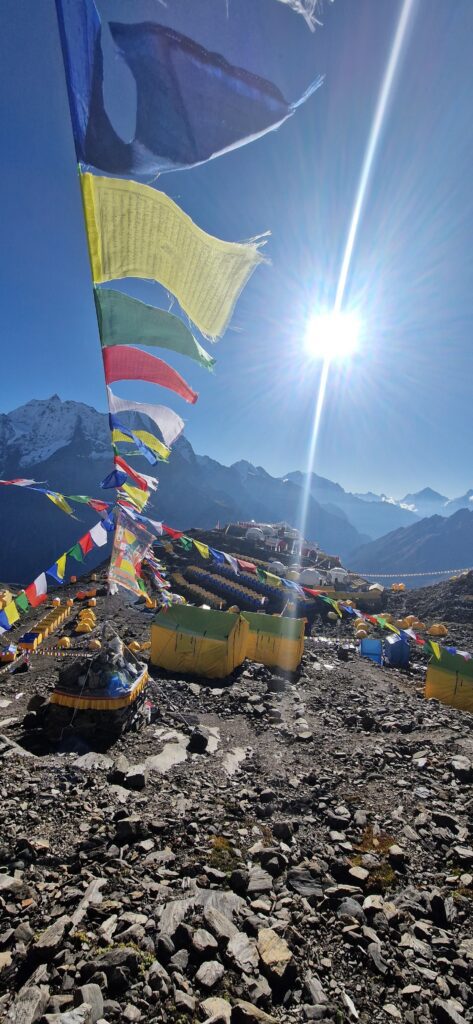
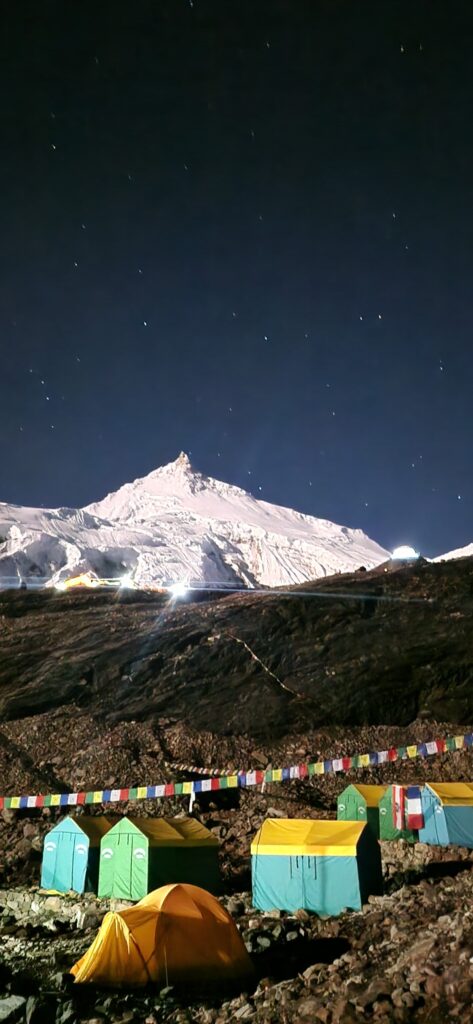
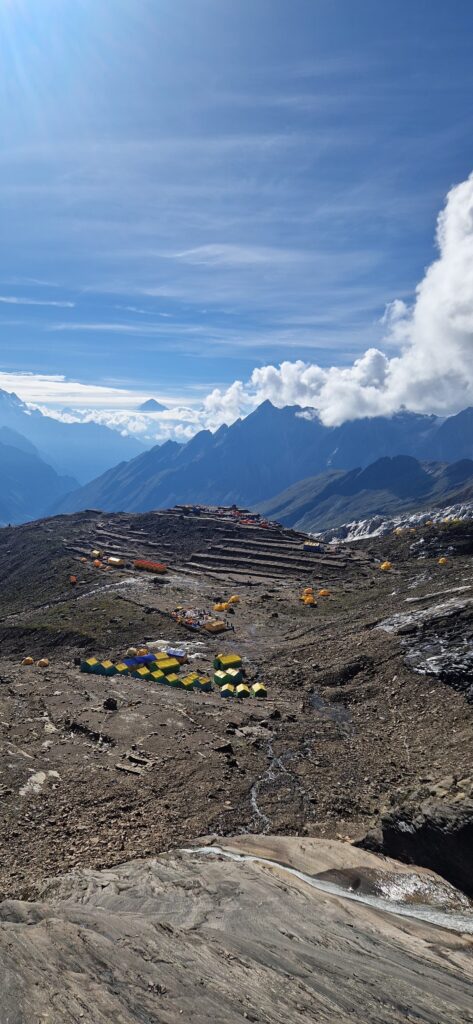
From Sama Gaon, we enter Base Camp (approx. 4,700 m), where high-altitude activities really get underway. Everything changes: the conditions, the rhythm of the day, the way the team operates
Base Camp becomes the expedition’s operational centre – a place for rest, planning and preparation for ascents. From this point onwards, we operate within an expedition system based on acclimatisation rotations and work at high-altitude camps.
Activities at high altitude – acclimatisation and the summit push
Once the base camp has been set up, the main part of the expedition begins:
- acclimatisation trips to Camp I and Camp II
- gradual „gaining altitude”
- setting up and running Camps I–IV
- preparation for the final push
Each participant is supported by a personal Sherpa (1:1), who is part of the Meroway Adventure team. If you need more support, that’s also possible. We work with guides whom we know, with whom we regularly collaborate, and whose skills have been tested in high-altitude conditions.
We do not use randomly selected staff or external subcontractors chosen on an ad hoc basis for a specific expedition. The team is carefully selected to suit the nature of the expedition and the ability and needs of the participants. Our guides are licensed Sherpas with experience on eight-thousanders, trained in both technical skills and decision-making. The team also receives additional training in high-altitude medicine in collaboration with MedEverest and Dr Robert Szymczak, which translates into practical support in situations requiring specialist knowledge and a rapid response.
This approach allows us to maintain control over the quality of the team and ensure a consistent standard of performance at every stage of the expedition.
The route to the summit is ready:
- There are handrails along the entire route
- additional protection for key sections
- logistical support for the team
The summit push is undertaken from the highest camp (Camp IV), using oxygen.
Under Meroway’s standard expedition package, participants are provided with 3 oxygen cylinders, which provides a higher level of safety compared with the minimum logistical requirements for expeditions of this kind. This approach increases the safety margin and operational flexibility during the final ascent.
For those with the relevant experience who are deliberately planning to ascend without the use of oxygen, it is possible to tailor their strategy at altitude on a case-by-case basis, in consultation with the team and taking current conditions into account.
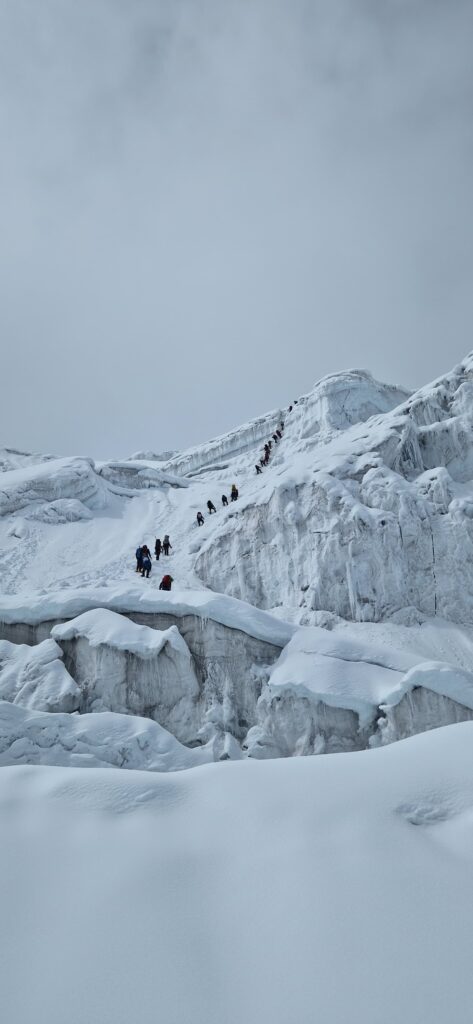
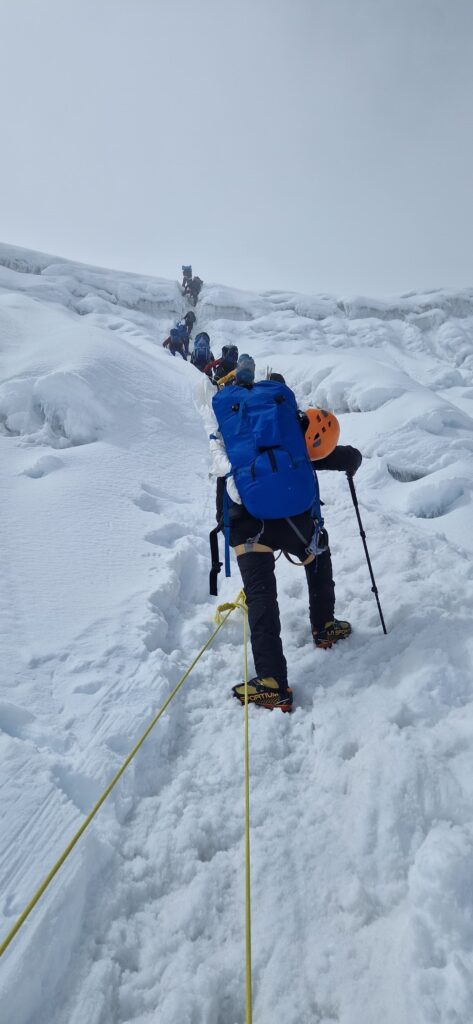
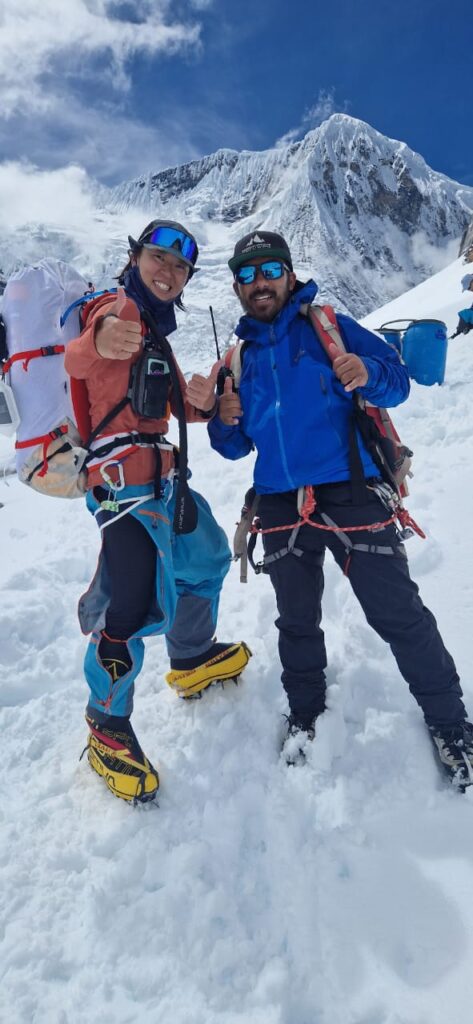
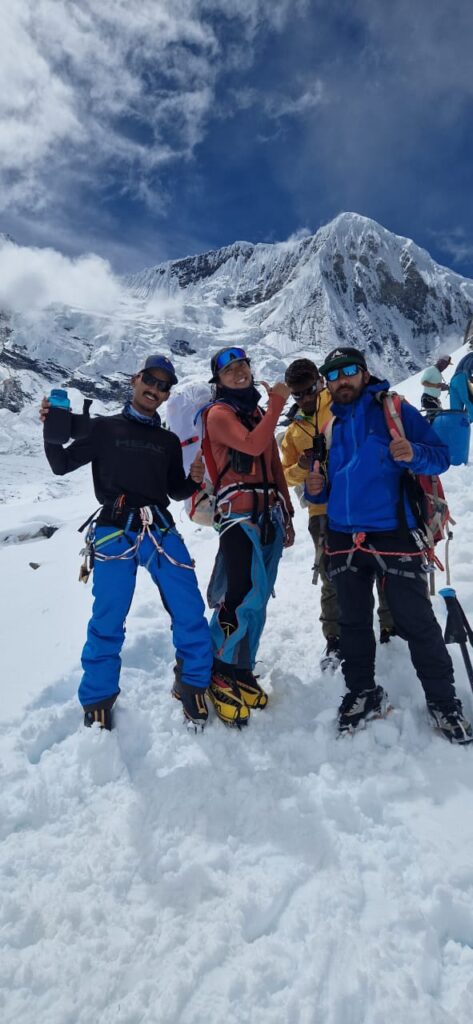
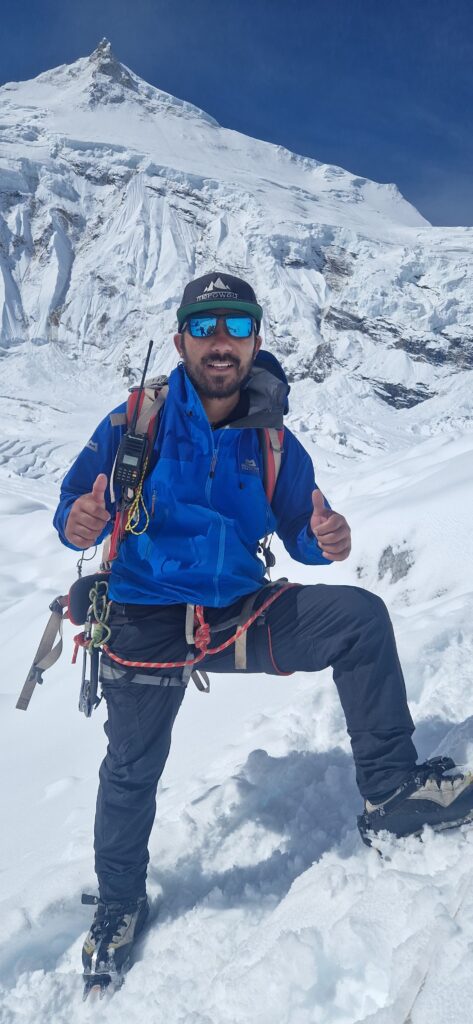
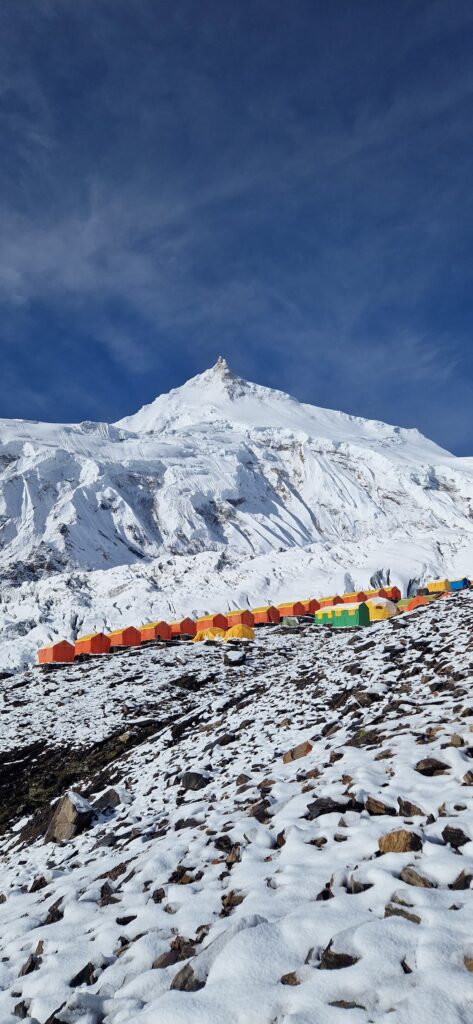
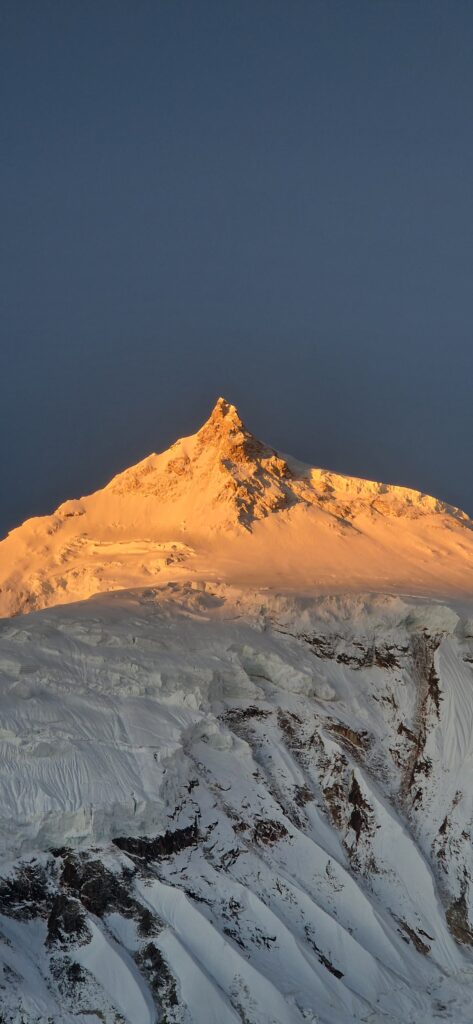
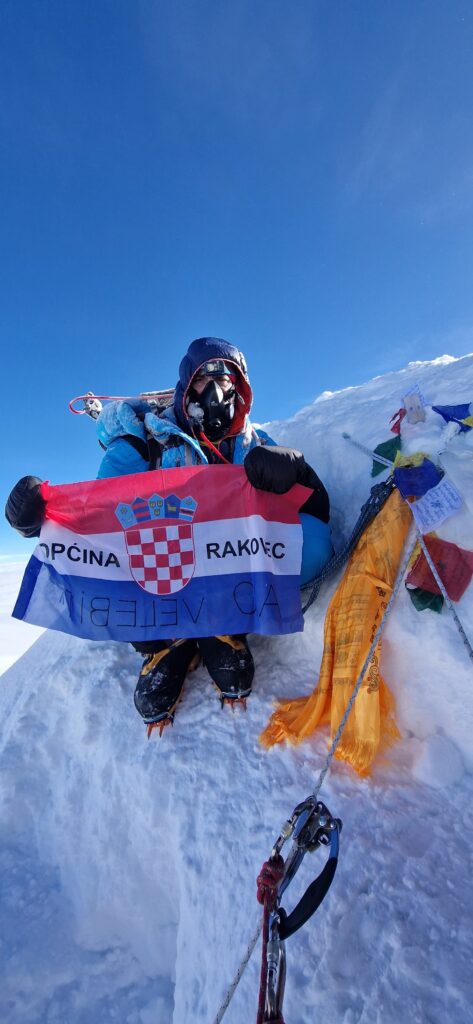
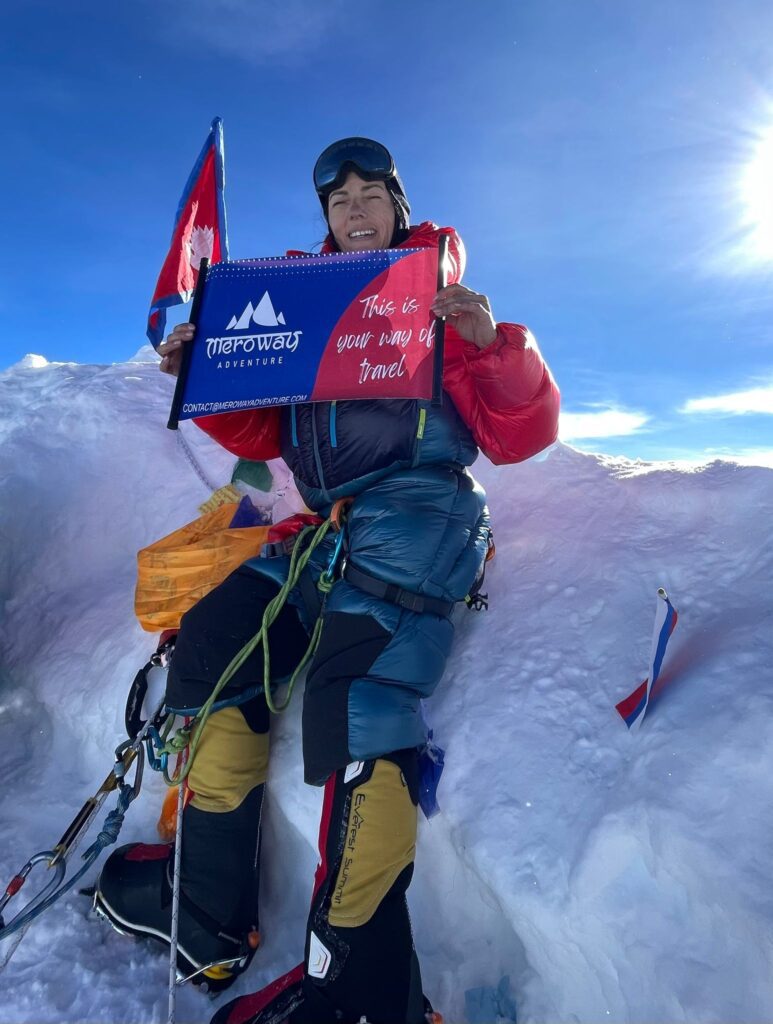
Ascent of Manaslu (8,163 m)
The ascent to the summit takes place in high-altitude conditions, in the so-called ‘death zone’, where the body functions at the very limits of its capabilities. This is a stage at which proper acclimatisation, the team’s experience and real-time decisions – tailored to the current conditions and the participants’ well-being – are of crucial importance.
Once the summit has been reached, the descent to the lower camps begins, followed by a gradual return to Base Camp.
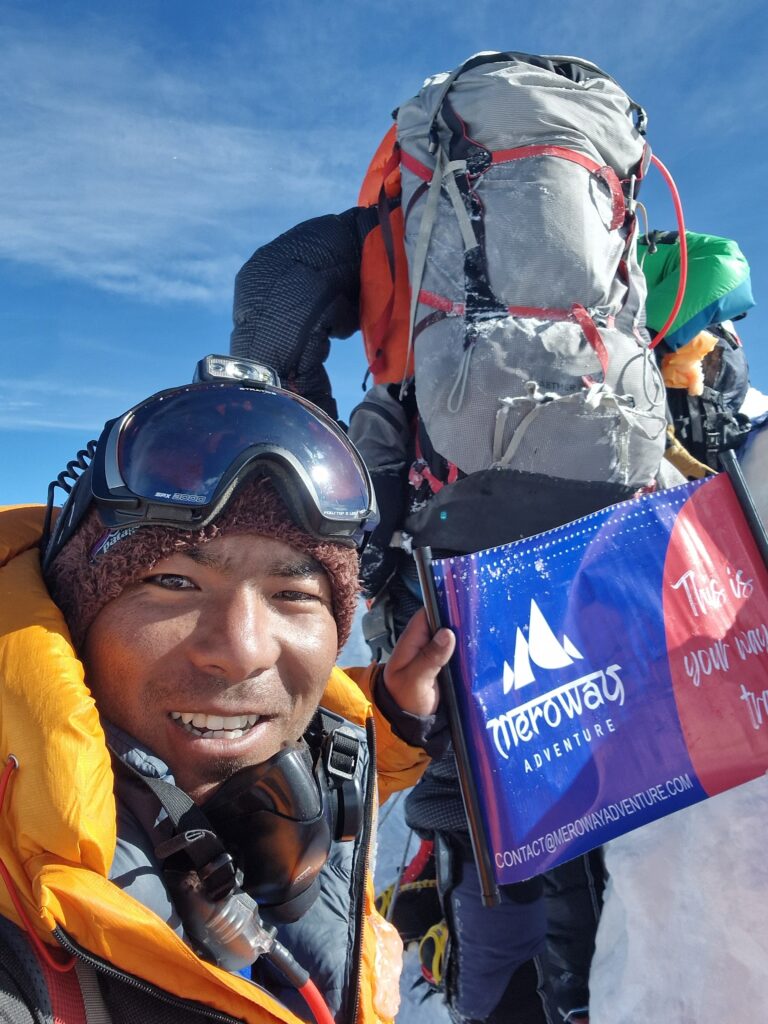
Return from Manaslu and the end of the expedition
Once the mountain expedition is over and we have returned to Base Camp, we begin our descent along the same route through the Manaslu Valley. The body gradually recovers as we lose altitude, and the pace of the trek allows for a safe descent and acclimatisation following a long stay above 5,000 metres.
Once we reach Machha Khola, we’ll return to Kathmandu by private transport, where we’ll have time to rest, reflect on the expedition and finalise the logistics of the whole trip.
High-altitude experience and a proven team
The expedition is being organised in collaboration with an experienced team of Nepalese high-altitude guides who regularly work on eight-thousanders. Each participant is supported by a personal Sherpa (1:1), who is part of the Meroway Adventure team.
We work exclusively with guides with whom we regularly undertake high-altitude expeditions and whose expertise has been repeatedly proven in expedition conditions. The team is carefully selected, depending on the nature of the expedition and the participants’ ability levels.
Our guides are licensed Sherpas with experience on eight-thousanders, well-prepared both technically and in terms of decision-making.
The team also receives additional training in high-altitude medicine in collaboration with MedEverest and Dr Robert Szymczak, which provides practical support in situations requiring specialist knowledge and a rapid response.
Security based on practical solutions
Safety is not an afterthought, but the cornerstone of expedition organisation. We provide solutions that have a real impact on operations in high-altitude environments:
- oxygen system (3 cylinders per participant – more than the standard for expeditions to Manaslu)
- a prepared route (fixed ropes along the entire route)
- support from a professional, licensed team of Sherpas with experience on eight-thousanders
- an acclimatisation and rotation plan that has been consulted on and is in line with the recommendations of our medical partner, MedEverest
Each of these factors has a direct impact on safety and operational efficiency at altitudes above 6,000–8,000 metres.
Medical package and doctor’s support (MedEverest)
The expedition is covered by extended medical support:
- MedEverest package
- putting together first-aid kits tailored to the nature of the expedition
- procedures for dealing with high-altitude situations, including rescue procedures
- consultancy support from a high-altitude medicine specialist
The team of guides and Sherpas is trained in high-altitude response procedures and high-altitude medicine, enabling them to make the right decisions in situations requiring a rapid response.
High-altitude insurance and evacuation
The price of the expedition includes comprehensive high-altitude insurance:
- medical expenses and accident insurance
- operations above 5,500 metres
- helicopter rescue
This means that participants do not have to organise key safety measures themselves; they can count on our full support.
A personalised approach and organisation
The expedition is carried out by a small, tightly-knit team, which allows for a personalised approach and flexibility at every stage of the expedition. We provide:
- pre-departure preparations
- equipment and logistical support
- Contact in Polish
- the option to make individual arrangements and tailor the scope to your needs
Each participant is part of a real expedition team, operating on the basis of cooperation, responsibility and a shared goal.
Dispatch standards and organisational quality
The expedition has been designed on the basis of experience gained from high-altitude expeditions and the practical needs of participants operating at altitudes above 7,000–8,000 metres. We provide all the key elements that contribute to the safety and effectiveness of the operation:
- private Sherpa (1:1)
- full camp logistics
- expanded aerobic system
- medical support (MedEverest)
- comprehensive high-altitude insurance
Each of these elements is standard, not an optional extra. At the same time, the organisation of the expedition is based on working directly with the team, without using random subcontractors, which allows us to maintain control over quality and operations at every stage of the expedition.
This approach allows us to maintain full control over the quality of the expedition and ensure a consistent standard of service – from the first day of the trek right through to the summit push.
Are you interested in an expedition to Manaslu?
If you’re thinking about taking part in the expedition or want to find out whether it’s the right choice for you:
- Please get in touch with us
- We’ll discuss your experience and qualifications
- we will set out the organisational details
FAQ – frequently asked questions:
Is a Manaslu expedition right for me?
This expedition is intended for people with high-altitude experience and excellent physical fitness. Previous experience of climbing an eight-thousander is not required, although experience above 6,000–7,000 metres is a major advantage and is what we recommend. We assess each application individually — we help you evaluate your level of preparation and your realistic chances of success.
Do I need any climbing experience?
The standard route on Manaslu is not technically very difficult, but it does require the ability to walk in crampons, use a hand rope, and have a basic familiarity with glacial terrain. The most important factors are: fitness, acclimatisation, high-altitude experience and at least basic technical skills. We do not consider the option of teaching the basics, not because we are unable to do so, but because it is not in line with our standards for a responsible approach to organising the expedition.
What sort of support is provided during the expedition?
Every participant is provided with a personal Sherpa (1:1), support from the high-altitude team and full camp logistics, but please note – you are responsible for carrying your own personal kit whilst on the mountain.
In addition, of course, you’ll have access to a secured route (fixed ropes), a fully equipped base camp and organisational support throughout the entire expedition, from your arrival in Kathmandu right through to your transfer to the airport at the end of the expedition.
How much oxygen is supplied?
As standard, we provide three oxygen cylinders per participant, a cylinder for the Sherpa, masks and regulators (including spares). This is an enhanced system that increases safety and operational flexibility during the summit push. Of course, it is possible to increase the amount of oxygen for an additional fee, or to climb without oxygen – in which case we will adapt our strategy accordingly.
Is it possible to go down without using oxygen?
Yes — for those with the relevant experience, it is possible to climb without using oxygen. In such cases, the approach is determined on a case-by-case basis, in consultation with the team and taking into account the conditions on the mountain.
What are the arrangements for safety and medical care?
The expedition is covered by the MedEverest medical package, established operating procedures and support from a high-altitude medicine specialist.
The team is trained to respond to situations in high-altitude environments, including emergencies and rescue operations.
Is insurance included in the price?
Yes, the price includes comprehensive high-altitude insurance, extended to cover extreme sports, comprising: activities above 5,500 metres, medical expenses and personal accident cover, and helicopter rescue.


